
Last updated November 16, 2026
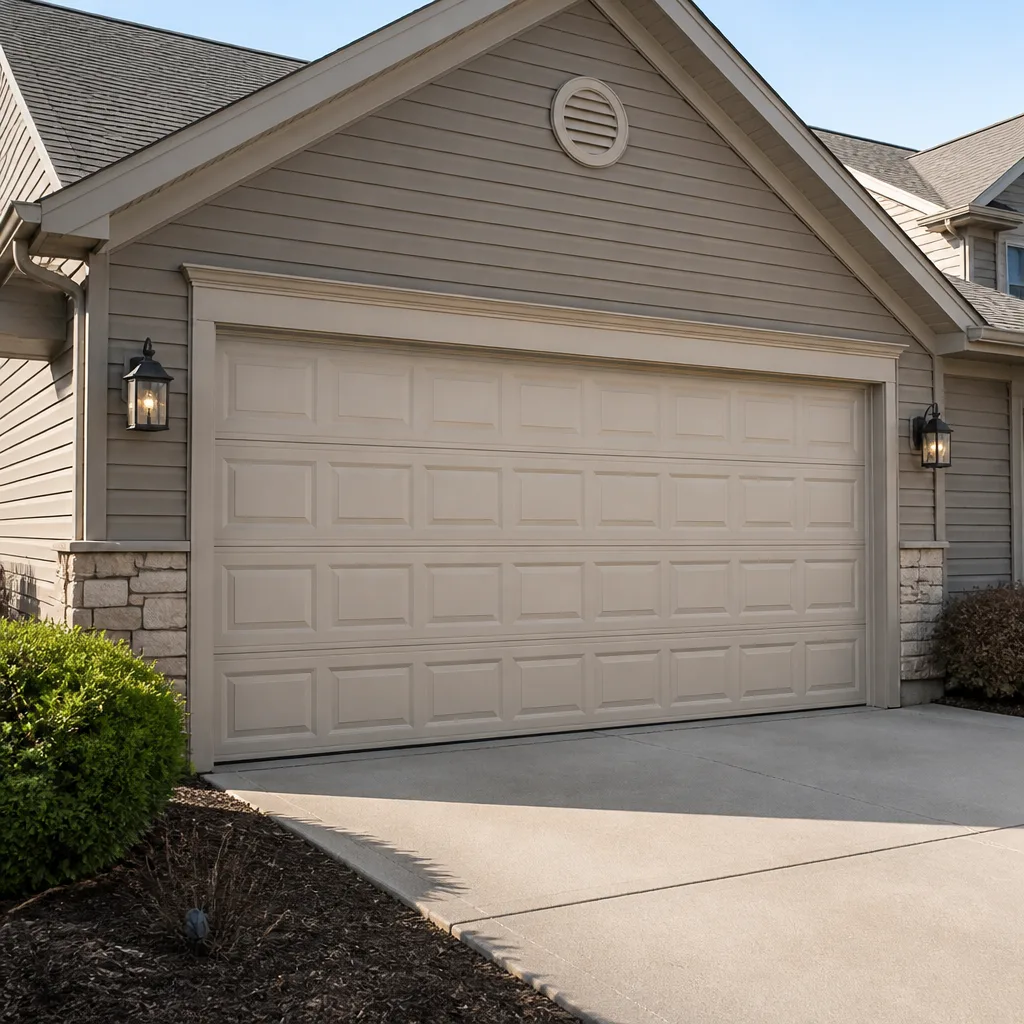 Raised-panel steel
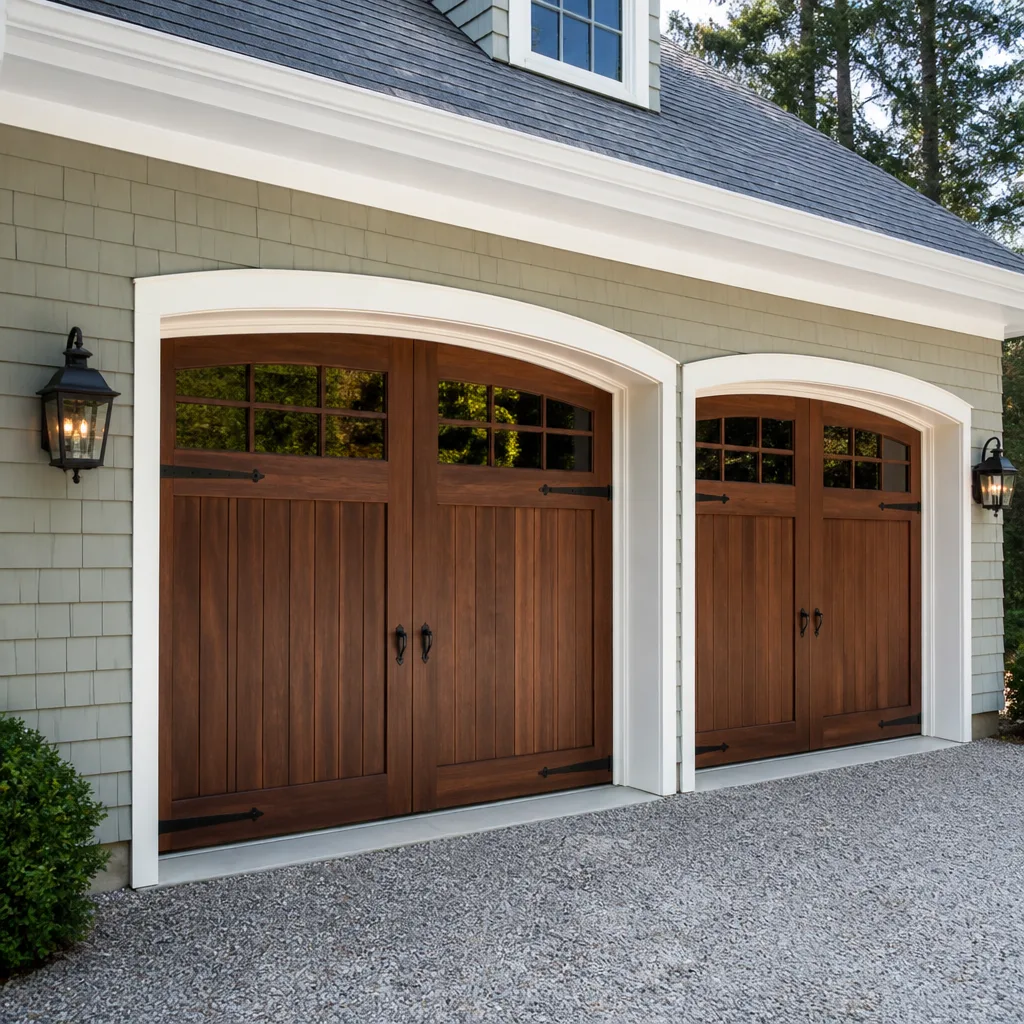 Carriage house
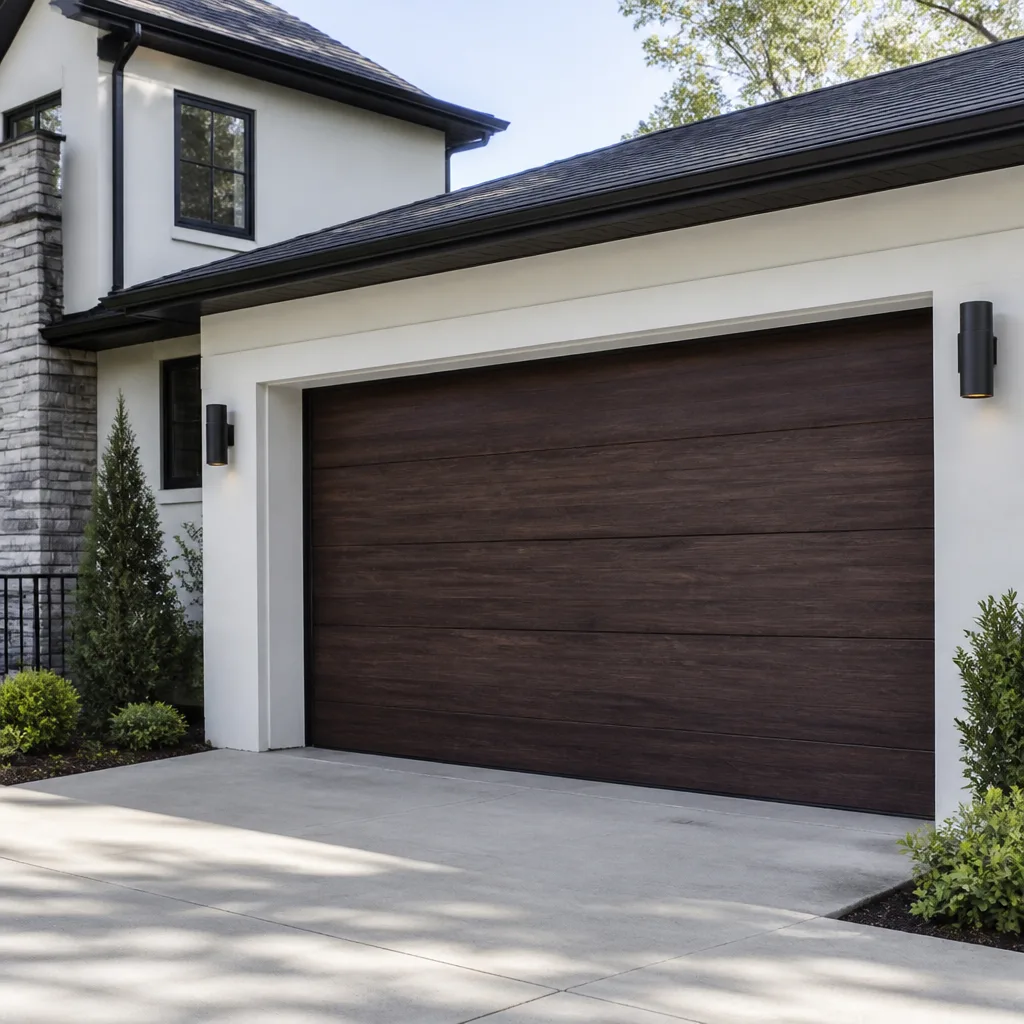 Modern flush
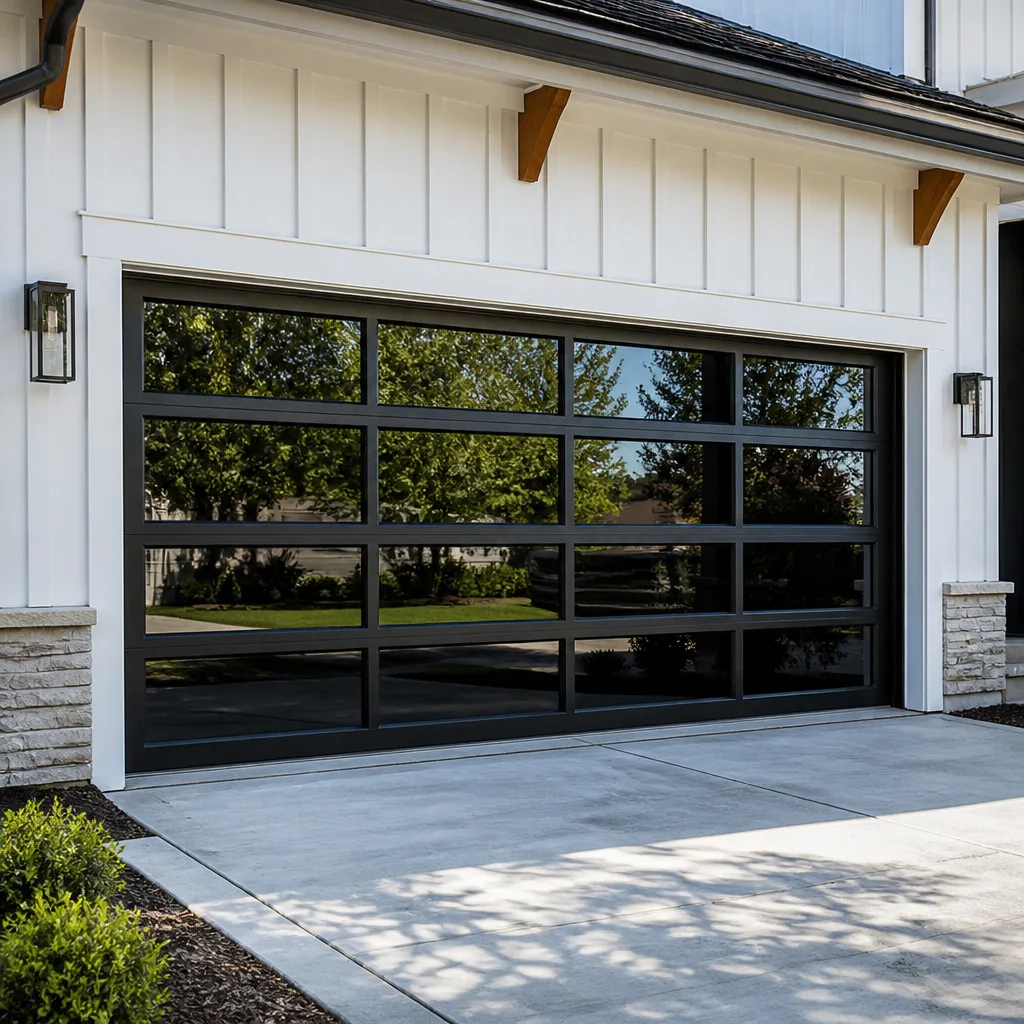 Full-view glass
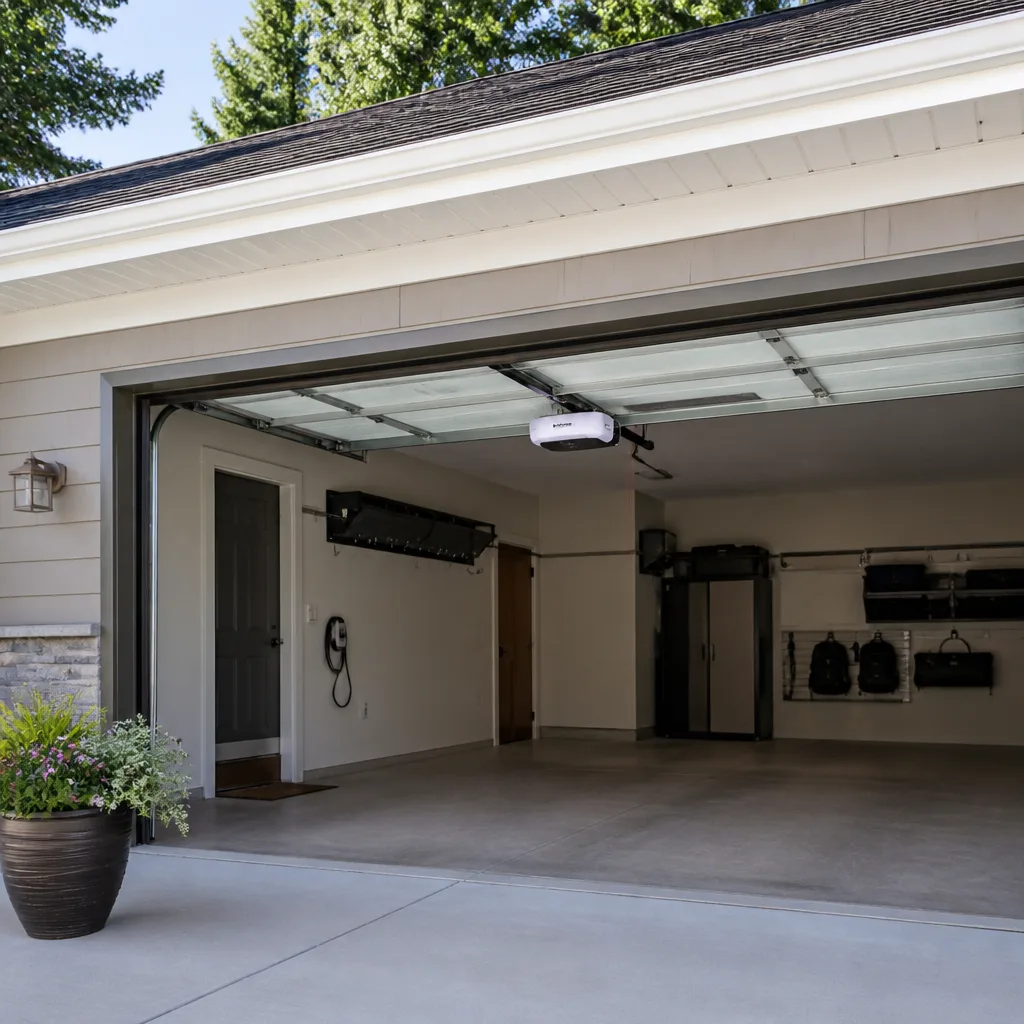 LiftMaster openers
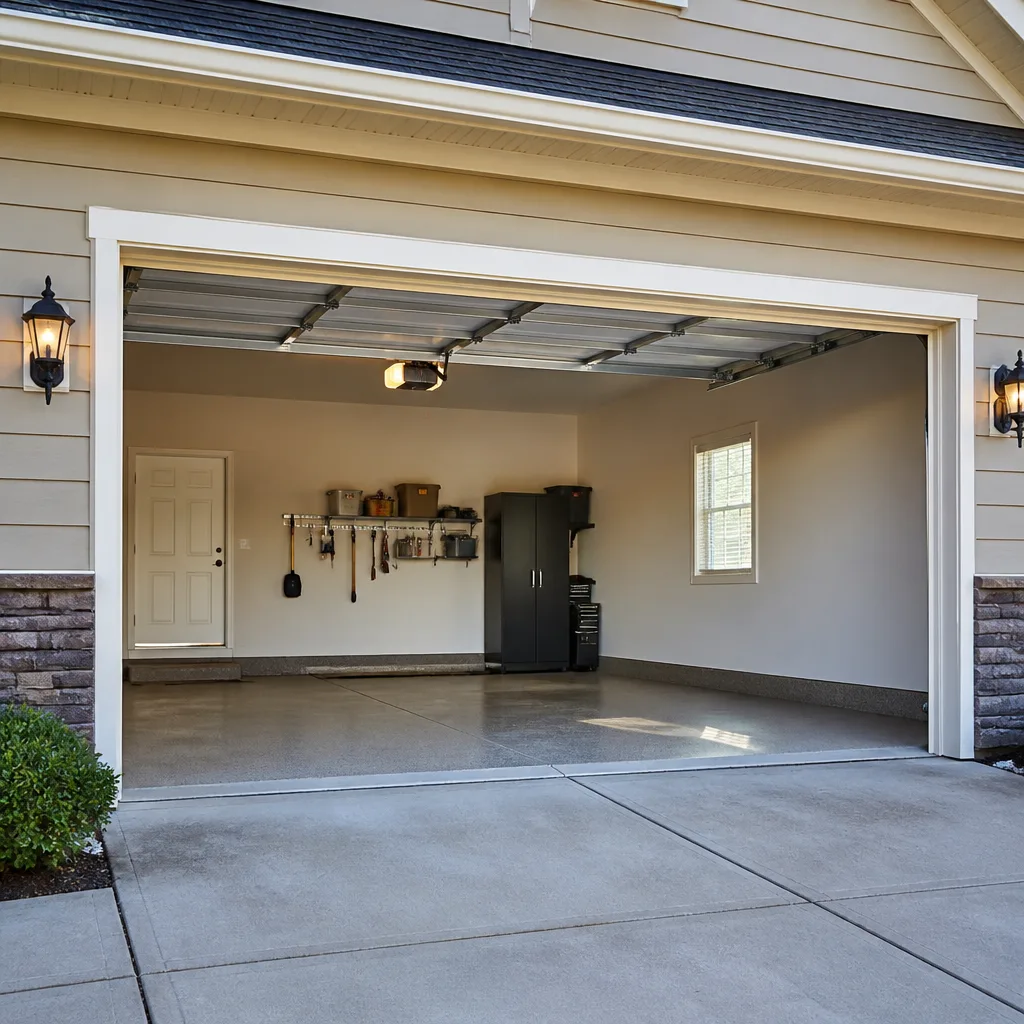 Chamberlain openers
Full 25-point door and opener safety check with every visit - springs, cables, rollers, tracks, and your LiftMaster or Chamberlain opener included
You get a price before we start. It does not change when the pro arrives.
Get your free estimateGarage Door Repair Troubleshooting in Sterling Heights: Common Problems and How to Fix Them
The door that “just stopped working” almost never stops without warning. It leaves a trail first: a squeak that shows up in October, a hesitation halfway up in January, a scrape along one side that comes and goes until it doesn’t. Most homeowners walk past those signals for months because a garage door is easy to ignore right up until it’s the only thing standing between a car and the street. What follows is a guide to reading those signals. You’ll learn how to match a specific sound or movement pattern to its likely mechanical cause, which checks are safe to do with your eyes and hands, which ones can hurt you, and how to tell whether a repair makes sense or whether you’re patching a door that’s already finished. Sterling Heights weather plays a real role in all of it.
Quick Answer
Most garage door problems fall into five categories: springs, cables, tracks and rollers, the opener, and the door structure itself. You can narrow down which one you’re dealing with using sound and movement alone, without touching a single component. Anything involving springs, cables, or the high-voltage side of the opener is a professional job; lubrication, sensor alignment, and the manual release are safe for you to check yourself.
Styles & brands we work with
- Raised-panel steel
- Carriage house
- Modern flush
- Full-view glass
- LiftMaster openers
- Chamberlain openers
Table of Contents
- The Symptom-to-Cause Map: What Each Sound Is Telling You
- Spring, Cable, or Track? How to Tell Them Apart With Visual Checks Only
- The Sterling Heights Seasonal Failure Pattern Nobody Warns You About
- Safe DIY Checks vs. the Ones That Send People to the ER
- When the Problem Is the Opener, Not the Door
- The One Test That Tells You Whether to Repair or Replace
- Brand Matters Less Than You Think, But It Still Matters
The Symptom-to-Cause Map: What Each Sound Is Telling You
A garage door is a machine with a small number of moving parts, and each part fails in a way that sounds distinct. If you can describe the noise precisely when you call for service, you’ve already done half the diagnostic work. In our experience, homeowners who say “it makes a grinding sound” get a faster, more accurate answer than homeowners who say “it’s broken.” Here’s how the sounds map to causes.
- Loud bang from above the door, then the door won’t lift: a torsion spring has snapped. This is the single most common sudden failure, and it’s not something to test by hand.
- Grinding that rises and falls as the door moves: dry or worn rollers, or a torsion tube with dry bearings. Often the earliest warning you’ll get, and one of the cheapest to address before it wears the track.
- Popping or snapping during travel: a cable jumping its drum, or a roller binding at a track joint. Popping that repeats at the same point in the door’s travel points toward the track.
- Scraping along one side: the door is out of alignment and rubbing the jamb or the track. Left alone, this bends panels and wears the finish.
- Rattle or clatter: loose hinges, bracket bolts, or a chain-drive opener with slack. Common and usually minor.
- Clicking from the opener with no movement: the motor is trying to run but the logic board, capacitor, or safety circuit is stopping it. This is an opener problem, not a door problem.
Notice that none of these required opening anything up. Sound is free diagnostic information. If you live near the Clinton River or in one of the older neighborhoods off Van Dyke, where doors tend to be a little older and hear more seasonal cycling, that sound library is worth paying attention to.
Spring, Cable, or Track? How to Tell Them Apart With Visual Checks Only
These three failure categories account for the majority of no-lift calls, and they look different if you know what you’re looking at. You can identify which one you have from the floor, using your eyes and a flashlight, without disconnecting anything.
- Look at the spring above the door. A torsion spring is a horizontal coil on a shaft above the opening. A broken one usually shows an obvious gap in the coil. Extension springs run along the horizontal tracks on either side; a broken one may be stretched out of shape or hanging loose. A visible gap or a dangling spring means stop here.
- Look at the cables. The cables run from the bottom corners of the door up to the drums. A cable that’s off its drum, frayed, or lying slack along the side means the door’s lift is compromised. Never reach up to re-seat one.
- Look at the track and rollers from the side. Stand back and look down the length of each vertical track. A bend, a gap at a joint, or a roller sitting outside the track points to a track problem. Track issues often follow an impact, so check whether a car bumper dinged the door or rails.
- Look at the door’s horizontal lines. If the panels aren’t parallel to the floor, or one side sits higher than the other, the door is racked. That’s usually a cable or track issue combined, and it’s not a repair to attempt yourself.
Here’s the practical point: a spring problem, a cable problem, and a track problem all produce “the door won’t go up.” They look alike to someone in a hurry and completely different to a trained eye. For anything involving the spring or cable, treat the door as loaded and stop. That is exactly the kind of diagnosis a specialist can make over the phone or in a quick visit, and it’s the kind of repair we handle regularly here in Sterling Heights.
The Sterling Heights Seasonal Failure Pattern Nobody Warns You About
Garage doors in southeast Michigan live a harder life than doors in milder climates, and the failures tend to cluster around the change of seasons. The pattern is predictable enough that you can plan for it. Sterling Heights gets repeated freeze-thaw cycles through winter, which push and pull at every joint, gasket, and track anchor in the door system. Then comes the humidity swing of late spring and summer, which works on the finish and on anything metal that’s been scratched or exposed.
- First hard freeze: the bottom rubber seal stiffens and the door can start closing unevenly or fail to seal at the threshold. Weatherstripping that felt fine in October cracks and drops.
- Mid-winter thaw cycles: moisture works into track anchor points and into the rollers, then freezes. The door starts grinding or binding at the same spot every day. Lubrication that was adequate in summer has stopped doing its job.
- Late spring: everything that loosened over winter shows up as rattle, clatter, and small alignment drift. Hinges and brackets that survived the freeze now need a look.
- Summer humidity: the door panels themselves and any exposed metal hardware get a steady dose of moisture. Paint scratches left through the winter start to show rust.
What this means for a Sterling Heights homeowner is that the smart time to inspect and lubricate is before the first freeze, not after the door stops working in January. It also means that a repair made in July should account for what the door will be asked to do in February. A fix that ignores the freeze-thaw cycle tends to come back the next winter.
Safe DIY Checks vs. the Ones That Send People to the ER
There’s a myth worth clearing up right away: not all garage door work is dangerous, and not all of it is safe. The line is sharp, and it’s not about how handy you are. It’s about stored energy. A garage door’s torsion spring holds enough tension to do serious damage to a hand or arm, and a cable under load can whip unpredictably. Neither is something a homeowner should adjust, release, or manipulate.
Safe to do yourself
- Lubrication: a garage-door-appropriate lubricant on the hinges, rollers, and springs, done while the door is closed and the opener is unplugged. Follow the door manufacturer’s guidance for what goes where.
- Sensor alignment: the safety sensors near the floor of the opening can be nudged back into alignment if the LED indicators show they’ve lost sight of each other. This is one of the most common “won’t close” causes and one of the easiest to fix.
- Manual release: the red pull handle lets you disconnect the door from the opener so it can be moved by hand. Knowing where it is and how it works is worth ten minutes of your time, especially if the power ever goes out.
- Visual inspection: standing back and looking, listening, and noting where the door binds. This is the most valuable check you can do.
Stop and call
- Adjusting or replacing springs of any kind. This is the single most dangerous component on the door.
- Touching or re-seating cables. They look loose only because the tension was released; pulling one can be catastrophic.
- Adjusting the opener’s travel limits or force settings to make a binding door move. This hides the real problem and overworks the motor and the door.
- Straightening a bent track by hand while the door is attached. Track geometry and door load interact.
Beyond the injury risk, there’s a practical reason to leave spring and cable work alone: adjustments made by someone untrained commonly void the door’s warranty and can leave the system in a state where the next failure is worse. A specialist knows what to check before touching the tension. Our garage door repair service covers exactly these cases.
When the Problem Is the Opener, Not the Door
A door that won’t rise isn’t always a door problem. A meaningful share of no-lift and won’t-close calls turn out to be the opener, the safety sensors, or the wall control. The clues are different. If the motor runs but the door doesn’t move, you have a door-side problem. If the motor doesn’t run, or runs and immediately reverses, the opener is the likely culprit.
- Door goes up a few inches and reverses: almost always a sensor issue, a travel limit setting, or an obstruction the sensors are sensing. Check the sensor LEDs first.
- Motor hums, door doesn’t move: a stripped gear, a failed capacitor, or a broken drive. This is where a dedicated opener specialist earns their keep.
- Remote works intermittently: battery, frequency interference, or a failing logic board, depending on the brand. A LiftMaster or Chamberlain unit often has a clearer failure pattern than a generic one because the diagnostic codes are more consistent.
- Wall control dead, remote works: wiring or a control-board channel failure, not the motor.
This is why we treat garage door opener repair as its own service category rather than a sub-note on panel repair. Openers are where the electronics and the mechanical meet, and the diagnostic logic is different from a door-side repair. A Genie or Raynor opener that’s behaving strangely needs someone who knows the brand’s specific failure modes, not a general handyman. If you’re not sure whether it’s the door or the opener, describe the symptom and we’ll help you place it before you spend a dime.
The One Test That Tells You Whether to Repair or Replace
Here’s the test. With the opener disconnected and the door on its manual release, raise the door by hand to about halfway and let go. A door in good structural shape should hold position with minimal effort and stay put when you release it. A door that wants to fall should receive a careful inspection, not a “quick fix” of the spring tension.
What the test reveals is whether the door’s balance is intact, and balance is the best single indicator of whether a repair is worth pursuing. Add the following to your judgment:
- One bent panel or a single worn roller: repair, almost always. The door has plenty of life left.
- Multiple bent panels, a cracked bottom section, or a racked frame: you’re likely patching a door that’s past its structural threshold. A replacement makes more sense than chasing repairs.
- Repeated spring or cable failures on an older door: the rest of the system is likely near the end of its service life too. Repair is possible, but the cost of the next failure is worth weighing.
- Opener failing on a door that’s also structurally tired: replace the system together, and you save the second visit.
This is where a single company that handles repair, opener service, and full installation makes the most practical difference. You don’t have to call one company for a repair opinion and a different one for a replacement quote. The judgment call is made by the same people who’d have to do the work either way.
Brand Matters Less Than You Think, But It Still Matters
Garage door troubleshooting is largely mechanical and brand-agnostic at the diagnostic level: a binding roller is a binding roller whether the door was made by Clopay or Amarr. Where brand enters the picture is in the opener electronics, the replacement parts, and the specific failure patterns each manufacturer tends to produce. That’s why brand-agnostic service is worth insisting on. A homeowner shouldn’t have to hear “we don’t work on that brand” when their door was installed by a builder and happens to be a Raynor.
We service the eight most widely installed brands: LiftMaster, Chamberlain, Genie, Clopay, Amarr, Wayne Dalton, Craftsman, and Raynor. The practical effect is that your existing equipment stays your equipment. You don’t get steered toward whatever a dealer happens to stock. When the fix is a part that’s still available, that’s the fix. When the part has been discontinued, that’s a different and honest conversation about whether to repair or replace the opener.
If you’re in Sterling Heights and you’re not sure what you have, look at the opener housing and the label on the door’s bottom section. That’s usually enough to get the diagnostic conversation started. Our technicians have up to 14 years of experience across these brands and can guide you from there.
Common Mistakes to Avoid
- Greasing the tracks. Tracks should be clean, not lubricated. Lubricant in the tracks makes rollers slide rather than roll and collects grit, which accelerates wear. Apply lubricant to hinges and rollers, not the rails.
- Adjusting the opener force to “fix” a binding door. If the door is binding, the force setting should stay where the manufacturer set it. Turning it up hides the real problem and puts strain on the motor and the panels.
- Ignoring a sound that comes and goes. A scrape or a grind in October is a warning. A door problem left through the Sterling Heights freeze-thaw season is almost always a bigger, more expensive problem by spring.
- Storing things against the door. A bicycle or a rake leaning on a panel creates a slow, invisible load that leads to a bent section. Keep the door and its track clear.
- Replacing a spring with an unmatched one. Torsion springs are matched to the door’s weight and cycle life. One spring of the wrong rating stresses the other half of the system and can shorten its life substantially.
- Testing during a snow or ice event without clearance. Ice packed at the threshold is a common reason a door won’t close in mid-winter here. Clear the threshold before assuming a mechanical failure.
- Paying for a repair without a written quote first. Ask what’s being replaced, and in what quantity, before anyone starts. On this trade, a plain-language estimate should be routine.
See the difference
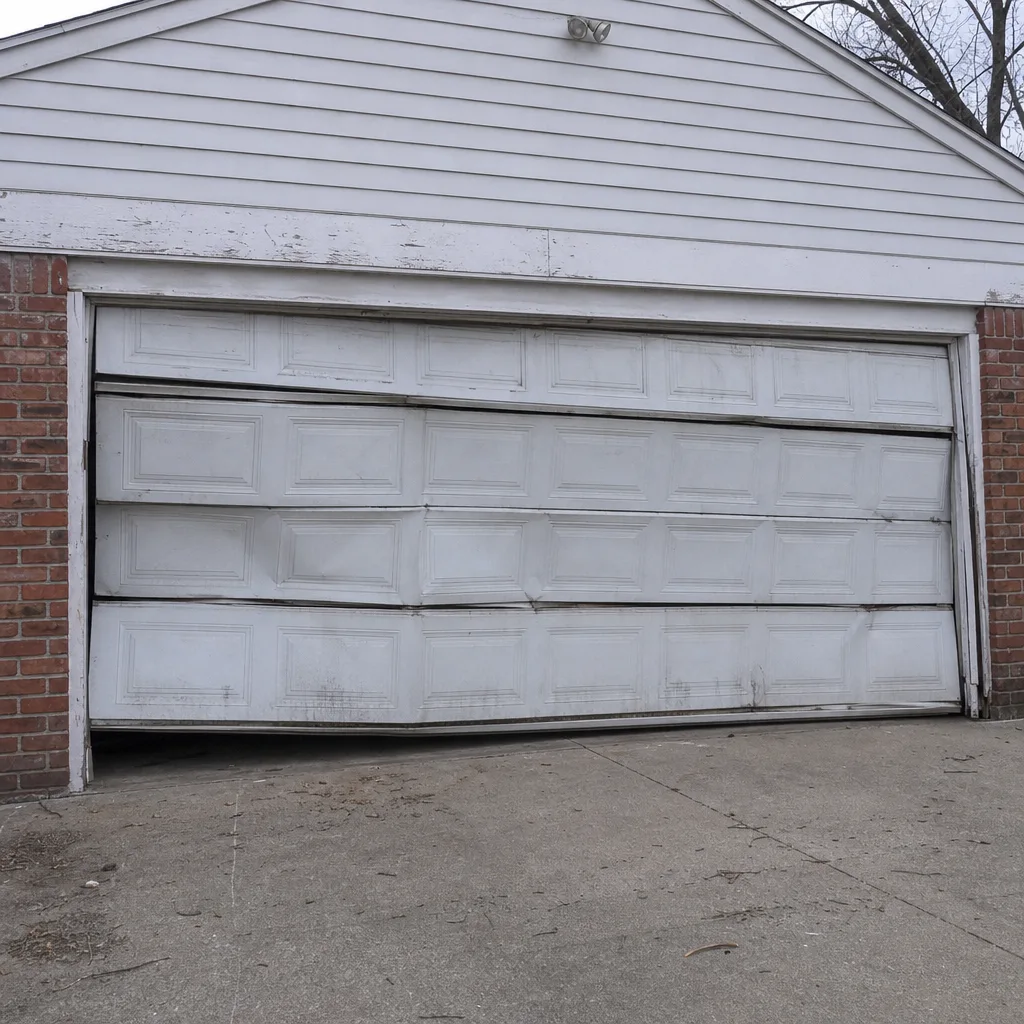 Before
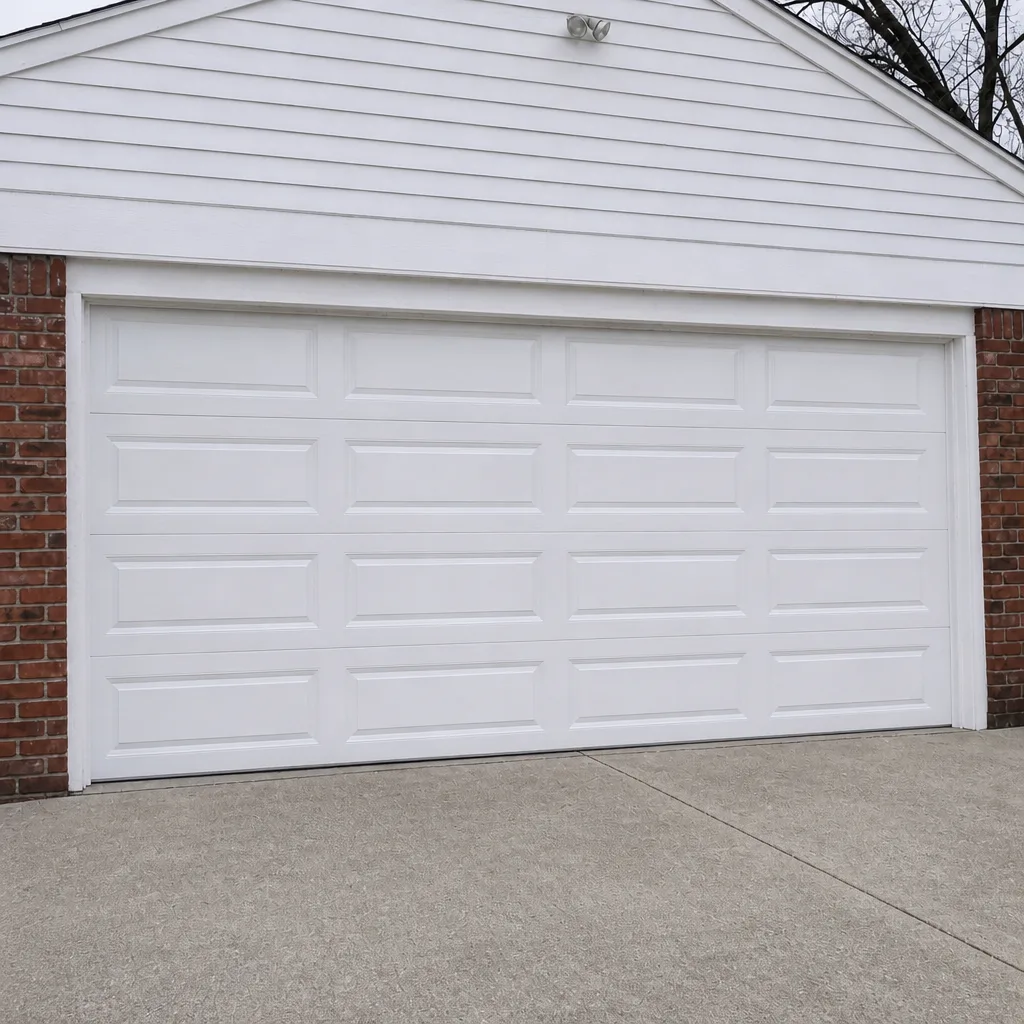 After
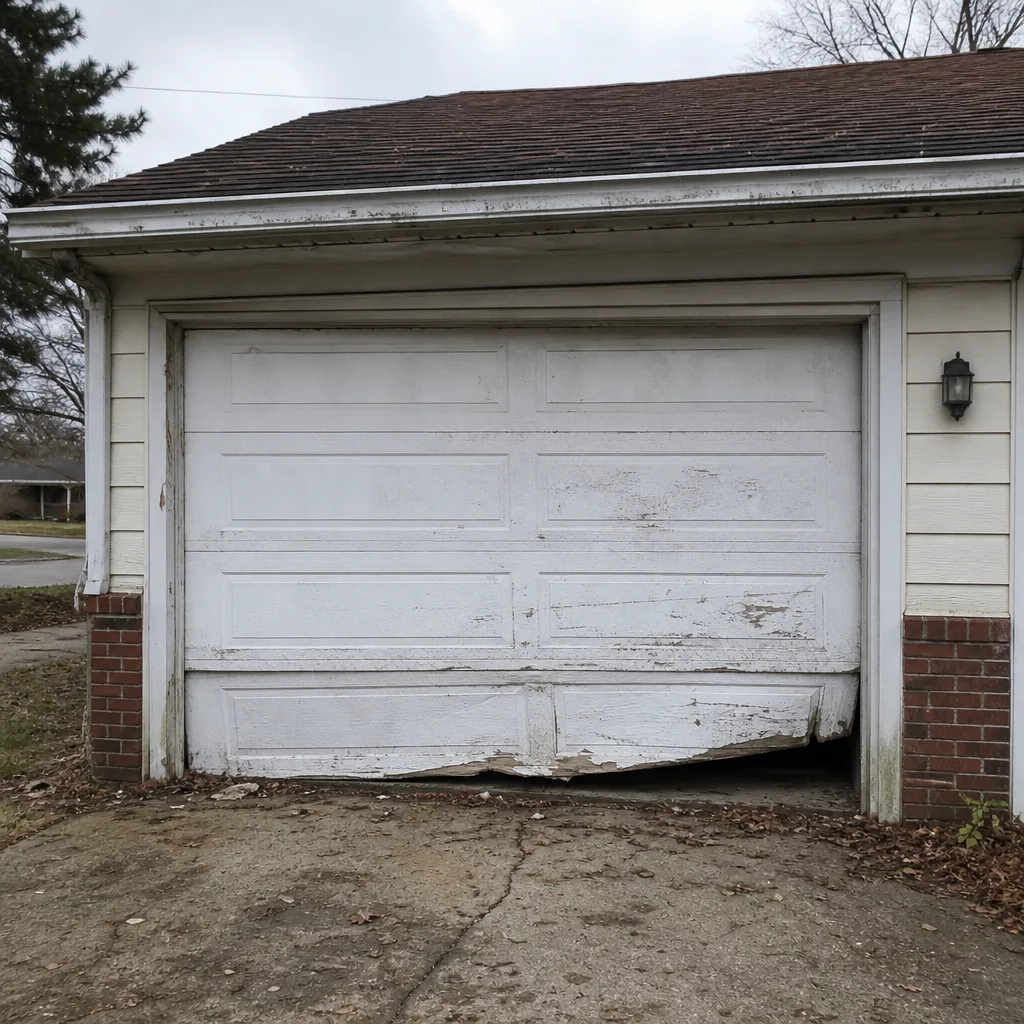 Before
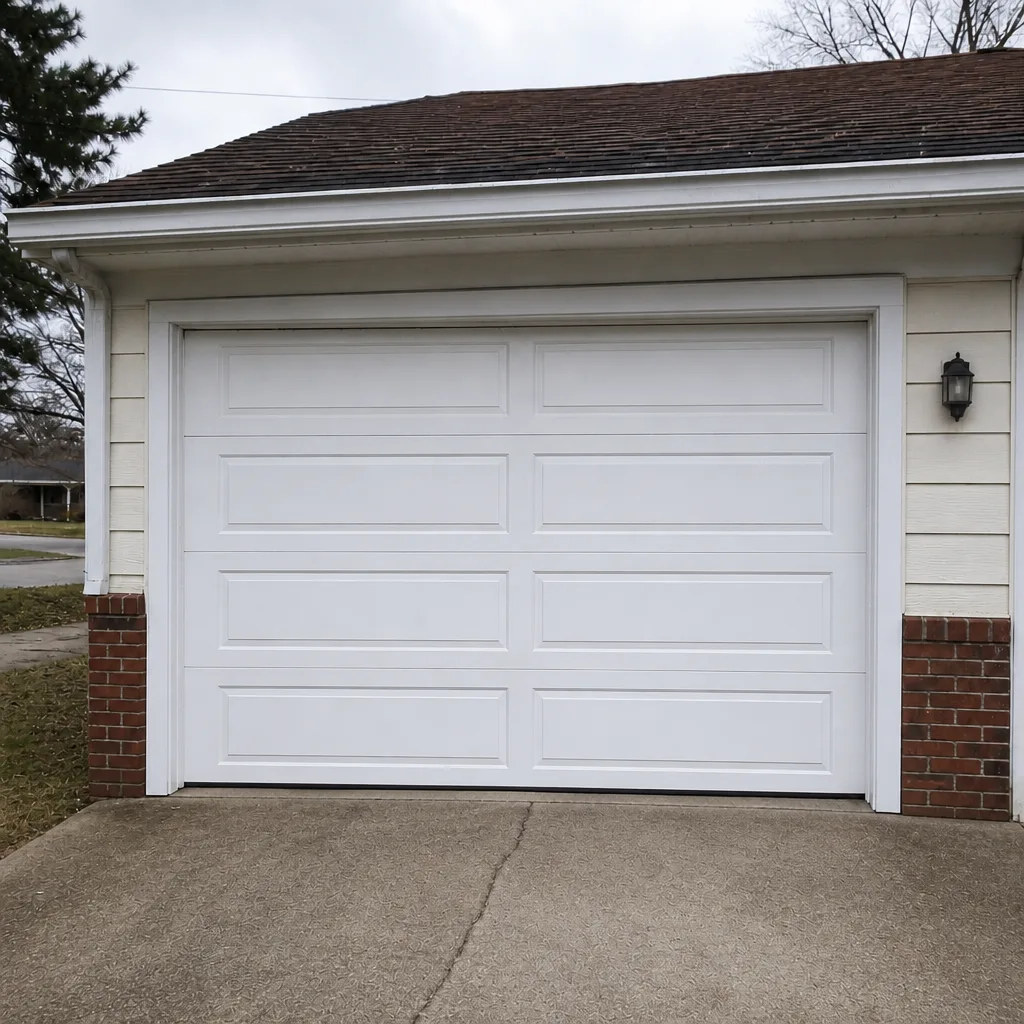 After
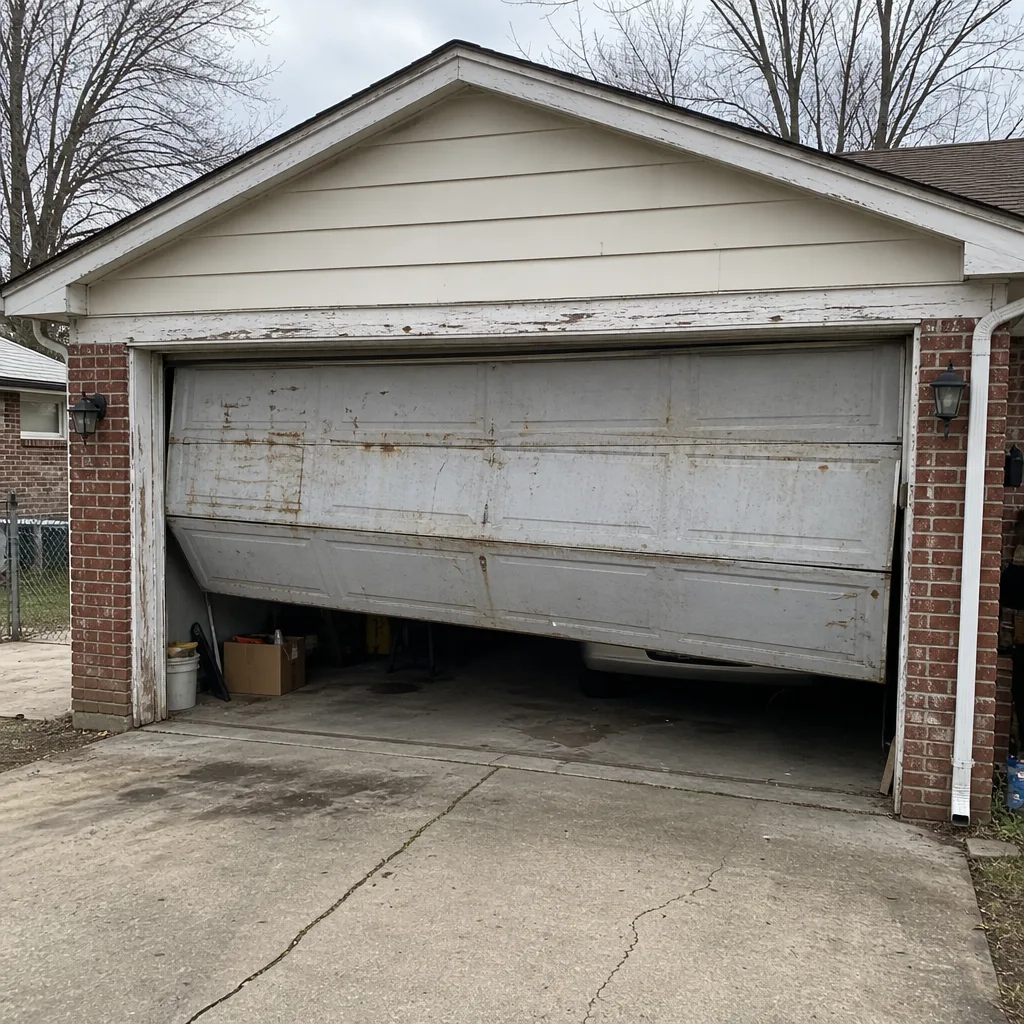 Before
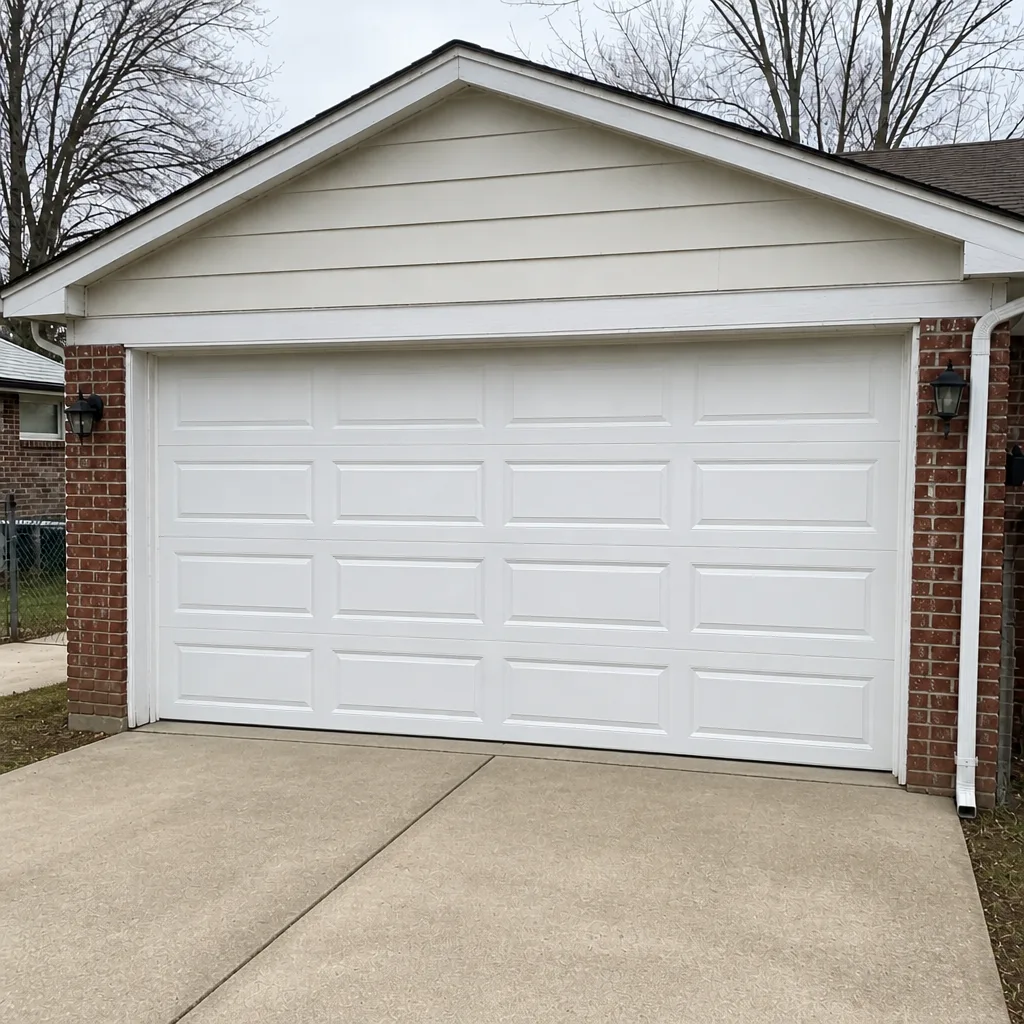 After
When to Call a Professional
You should call a professional any time the diagnosis points to a spring, a cable, a bent track, or the high-voltage side of the opener. Any loud bang followed by a door that won’t lift, a door hanging crooked, a cable off its drum, or a door that reverses on closing every time it’s asked to go down all warrant a call. If you have children or cars parked inside and the door is the only security point on the front of the house, that urgency is justified. If you’re simply not sure whether the noise is worth a visit, describe it. A phone diagnosis costs nothing.
Avalon Garage Door Service offers free estimates in Sterling Heights – call (866) 361-7888. We answer 24/7. Fast dispatch from 7am to 7pm, Sunday through Friday.
Frequently Asked Questions
Most repairs here come in roughly $120 to $400 depending on what’s failed: a roller or hinge job sits at the low end, spring and cable replacements toward the middle, and opener repairs vary with the part. A matched pair of springs costs about twice a single spring, since they’re replaced together. Those are typical estimates; the written quote you receive is the price you’ll pay. Call (866) 361-7888 for an exact quote – estimates are free.
Often, yes. Same-day service is available, and our dispatch runs from 7am to 7pm, Sunday through Friday. A door stuck open is a real security gap and worth prioritizing. Call (866) 361-7888 and we’ll get you on the schedule. We answer 24/7; a call outside dispatch hours is booked into the next opening.
Not without your agreement. The quote is given before any work begins, in writing, and nothing changes until we’ve spoken with you about why. If the inspection reveals a second failed component – a roller that looks fine on the phone but has cracked – we tell you before we touch it. The written estimate sets the final price.
Yes. Our technicians are licensed and insured, and our work is backed by a satisfaction guarantee. We service LiftMaster, Chamberlain, Genie, Clopay, Amarr, Wayne Dalton, Craftsman, and Raynor, so you don’t need to hunt for a different company if your opener or door happens to be a brand we carry in that list. Call (866) 361-7888 with questions.
It’s almost always the safety sensors, not a mechanical failure. Ice, snow, or debris near the floor sensors on a Sterling Heights winter morning blocks the beam and tells the opener to reverse. Clear the threshold and check the sensor LEDs first. If the door still reverses with a clear threshold, that’s a sensor or travel-limit repair, and worth calling about. Call (866) 361-7888 for help.
You can safely lubricate the hinges and rollers yourself with the door closed and the opener unplugged, using a garage-door-appropriate lubricant. Stay off the tracks (no grease in the guide rails) and leave the springs and cables entirely alone. If you’re not sure what’s safe to touch, that’s the moment to call. Call (866) 361-7888 and we’ll walk you through what’s yours to do and what’s ours.
The Bottom Line
Most garage door problems announce themselves long before they stop the door, and the symptoms are specific enough to diagnose from the floor. Match the sound or movement to the likely cause, rule out the safe checks yourself, and be honest with yourself about when you’re patching a door that’s past saving. Here in Sterling Heights, the seasonal freeze-thaw cycle adds a predictable rhythm to all of it: fall is when you inspect, winter is when you listen for binding, and spring is when you deal with whatever winter loosened. If the diagnosis points toward springs, cables, or opener internals, a specialist resolves it. We service every major brand, handle repair and full installation, and the first thing we do on any job is quote before we start. For a free estimate in Sterling Heights, call Avalon Garage Door Service at (866) 361-7888. We answer 24/7. Fast dispatch from 7am to 7pm, Sunday through Friday. More about the Avalon Garage Door Service approach and our Sterling Heights coverage is available if you’d like to read further.
Written by the team at Avalon Garage Door Service.