
Last updated November 16, 2026
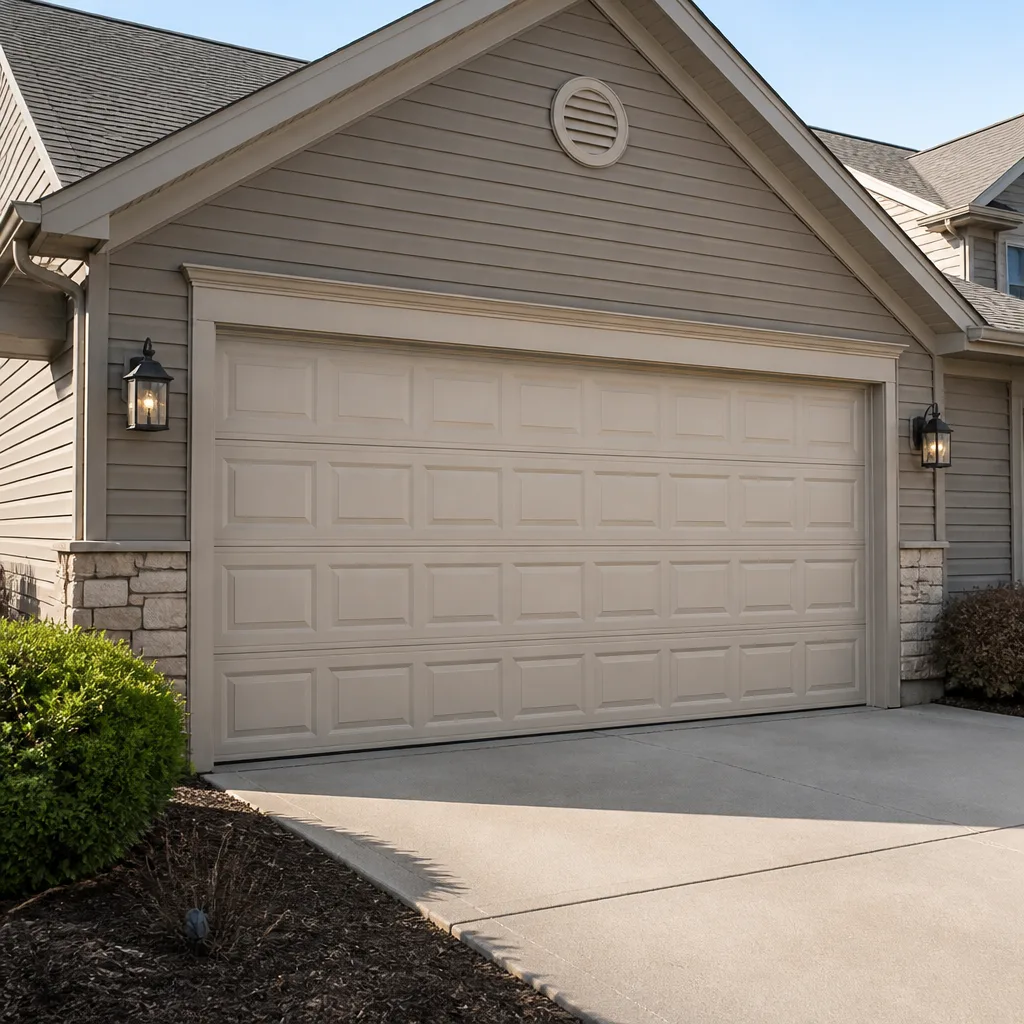 Raised-panel steel
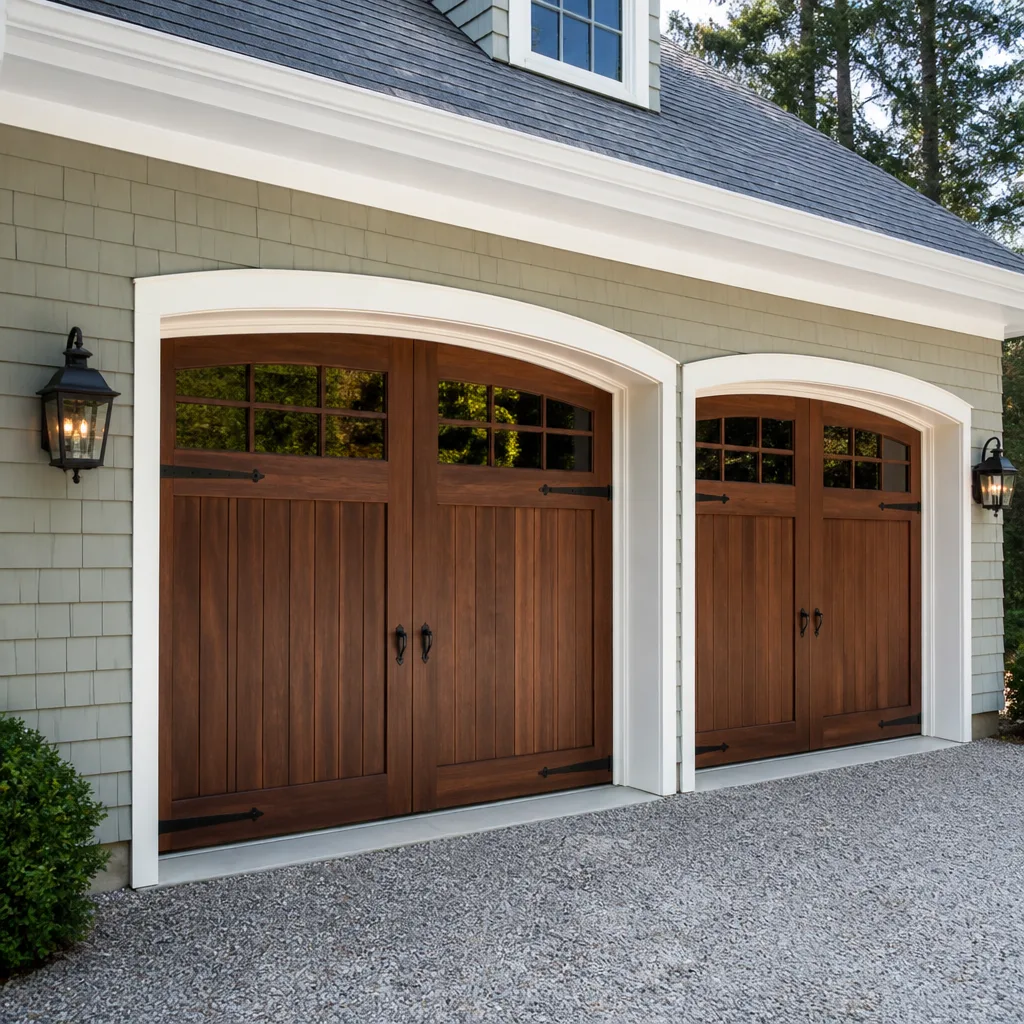 Carriage house
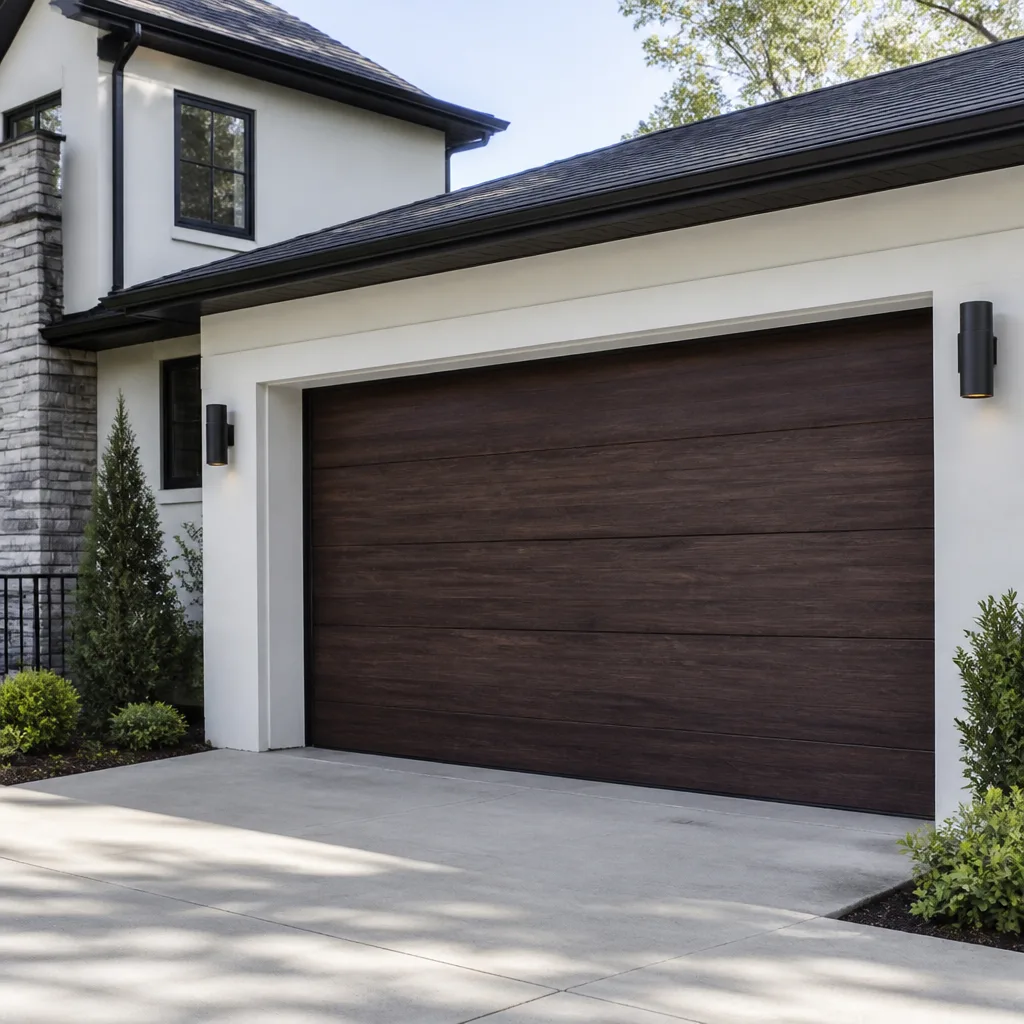 Modern flush
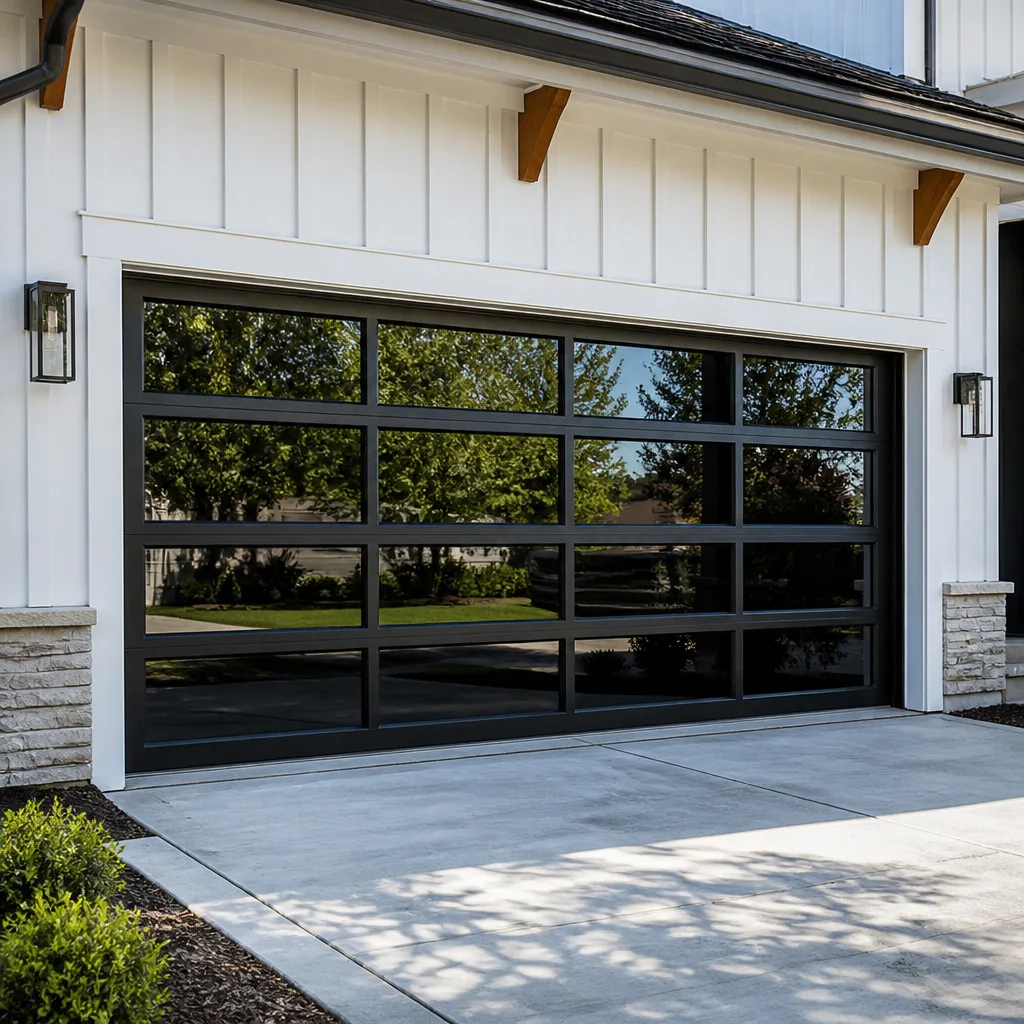 Full-view glass
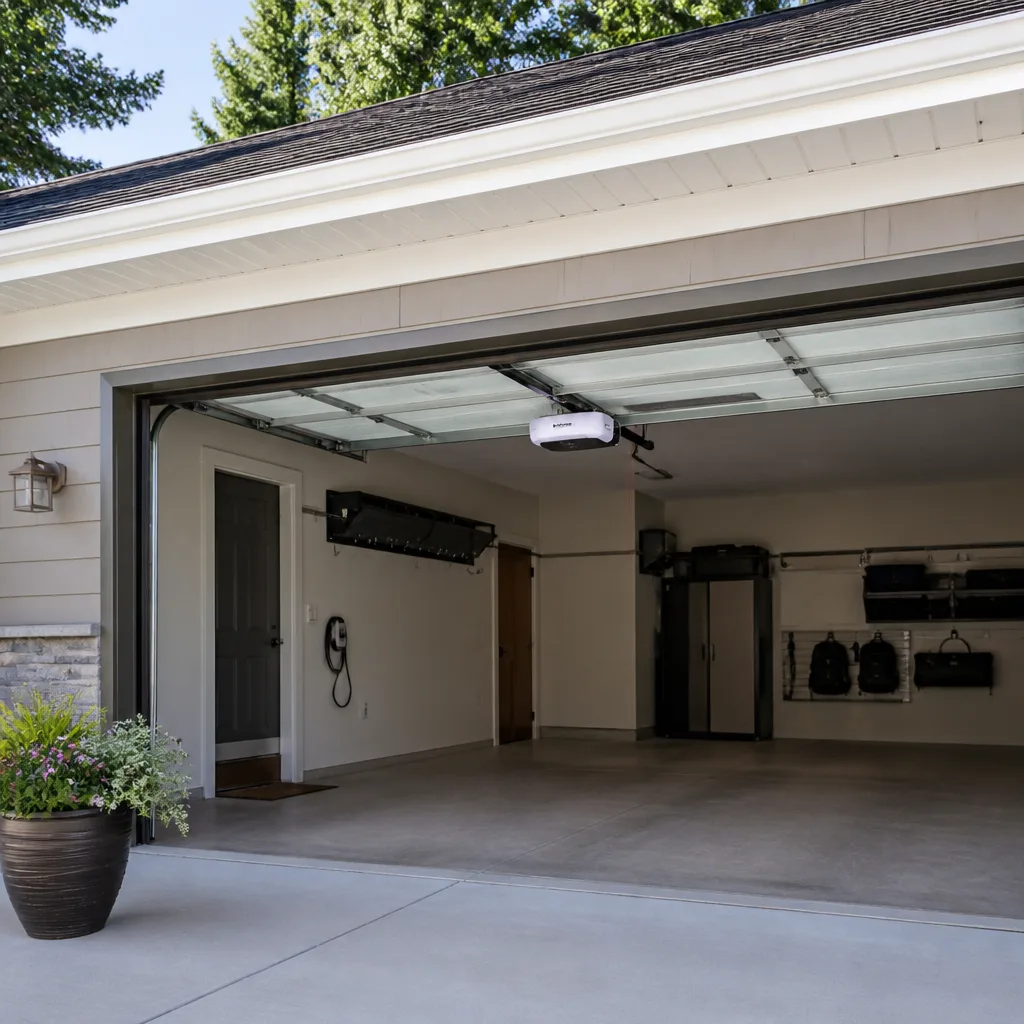 LiftMaster openers
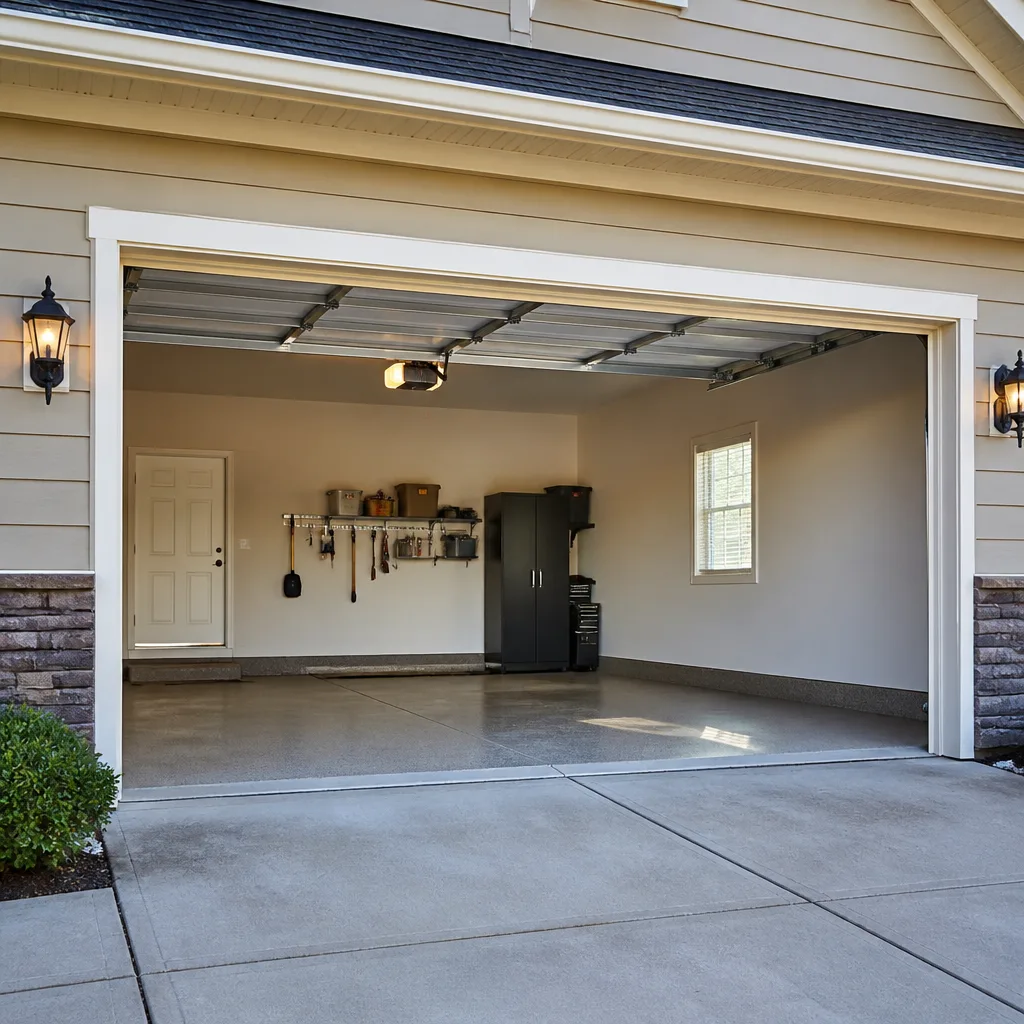 Chamberlain openers
Full 25-point door and opener safety check with every visit - springs, cables, rollers, tracks, and your LiftMaster or Chamberlain opener included
You get a price before we start. It does not change when the pro arrives.
Get your free estimateThe Complete Guide to Garage Doors in Sterling Heights
Most garage door guides are written for a homeowner in Phoenix. Sterling Heights is not Phoenix. A winter here can drop tens of inches of snow, road crews spread salt on every main artery in Macomb County, and the ground under your driveway swells and settles with the frost. That combination breaks doors that would last a lifetime in a milder climate. It also means the advice you read online – buy the cheapest steel door, skip the insulation, ignore the seals – often costs Sterling Heights homeowners money within a few winters. This guide maps each major decision, from material to insulation to opener type to service, to the actual conditions on the ground here, so you can choose once and choose right.
Quick Answer
For a Sterling Heights home, the door that holds up best is an insulated steel door with a factory finish and a proper bottom seal, paired with an opener rated for the weight of a two-car door. Budget for annual lubrication and seal checks, because freeze-thaw cycles and road salt are what wear these systems out fastest in Macomb County. Check your subdivision’s HOA rules before you order anything, since color, window placement and panel style are often restricted.
Styles & brands we work with
- Raised-panel steel
- Carriage house
- Modern flush
- Full-view glass
- LiftMaster openers
- Chamberlain openers
Table of Contents
- How Sterling Heights Weather Wears Out Garage Doors
- Frost Heave, Clay Soil, and Door Alignment
- Which Door Materials Survive Michigan Road Salt
- R-Values That Actually Matter in Zone 5
- HOA Rules and Subdivision Constraints
- Why Two-Car Doors Are the Norm Here
- Choosing the Right Opener
- Repair, Opener Service, or Full Replacement?
How Sterling Heights Weather Wears Out Garage Doors
Sterling Heights sits in southeast Michigan, and the seasons here punish a garage door in ways that a mild climate never will. Some winters bring more than 50 inches of snow. That snow melts, refreezes overnight, and repeats for months. Every one of those cycles moves moisture into the seams, hinges and bottom seal of your door and then expands it. Over a few seasons, small gaps become real ones. Steel that isn’t properly coated starts to rust at the edges, and a door that fit tightly when it was new begins to rattle and stick.
Road treatment makes it worse. Macomb County crews salt the main roads, and that spray lands on the front of your door every time you pull in or out. The lower panels and the bottom seal take the worst of it. A door with a factory-applied finish resists that spray far better than one painted in a driveway, and the bottom seal, the flexible strip at the floor, is the single cheapest part to replace and the most important to keep intact.
What we see most often in Sterling Heights is a door that’s mechanically healthy but has been neglected at the seal and hardware. Here’s what keeps one working through a Michigan winter:
- Lubricate hinges, rollers and tracks periodically so cold doesn’t seize them.
- Check the bottom seal each fall for cracks and gaps.
- Clear snow and ice from the threshold rather than letting it pack against the door.
- Watch for rust at the bottom edge of steel panels, where salt spray collects.
- Listen for new noises after a hard freeze, since that’s when alignment problems announce themselves.
None of this is exotic. It’s just that a door in Sterling Heights needs it more than a door somewhere warm and dry.
Frost Heave, Clay Soil, and Door Alignment
Macomb County’s soil leans heavy on clay, and clay holds water. When the ground freezes, that trapped moisture expands, and it lifts. This is frost heave, and it’s the reason a garage floor slab and the frame around it can shift a fraction of an inch over a winter. A fraction of an inch doesn’t sound like much until you realize a garage door operates in a gap measured in fractions of an inch to begin with. Move the floor up slightly and the door that cleared it last November now drags on the threshold, or the bottom seal no longer makes contact on one side.
You’ll notice the symptoms before you see the cause. The door closes and then reverses on its own. It stops partway. Daylight shows under one corner. The opener strains more than it used to. These are alignment and threshold seal problems, and they compound, because a door forced against a slab for long enough warps the panels and wears the opener motor.
If your door has started misbehaving after the first hard freeze, don’t assume the opener is dying. Get the alignment looked at by someone who works on doors every day and understands what a Michigan winter does to a threshold. Proper garage door repair starts with checking the opening, the tracks and the seal rather than replacing parts on a guess. Adjusting the door to clear a heaving slab, or re-seating a seal that’s lost contact, is straightforward when it’s diagnosed correctly.
Which Door Materials Survive Michigan Road Salt
Material choice is where generic advice fails Sterling Heights homeowners hardest. A material that performs beautifully in a dry climate can fail in five to seven years here, specifically because of salt spray and freeze-thaw. Here’s how the common options actually behave against Macomb County road treatment:
- Insulated steel with a factory finish: The workhorse for this climate. The coating resists salt spray, the steel is strong, and with proper maintenance it lasts. Quality names like Clopay and Amarr build doors engineered for northern climates. Watch the bottom edge and keep it sealed.
- Wood: Attractive, but it absorbs moisture and needs regular refinishing to survive Michigan winters. If you love the look, commit to the upkeep, because neglect lets salt and moisture work into the grain.
- Aluminum: Won’t rust the way steel does, which sounds ideal for salt. But it dents more easily, and a dented bottom panel is its own problem. Fine for some applications, less forgiving at a low, salt-sprayed threshold.
- Composite and wood-look options: Some modern composites handle moisture well and give you the wood look without the refinishing. Worth considering if appearance matters and you want to avoid a maintenance cycle.
The pattern is simple: in Sterling Heights, choose a material with a durable, factory-applied finish and keep the bottom seal intact. The brands a specialist works with routinely, including Wayne Dalton and Clopay, offer products built for this climate, and a trained technician can tell you which specific door matches your budget and your opening. That’s one reason it helps to work with a company that services a full range of manufacturers rather than steering you toward a single brand.
R-Values That Actually Matter in Zone 5
Insulation is the most over-sold feature in garage doors. The truth is that the R-value that matters depends on one question: is the garage attached to your house or detached?
For an attached garage, insulation does real work. An attached garage shares walls with living space, and an uninsulated door lets cold pour in and pull heat out of the rooms above and beside it. An insulated door helps keep that garage warmer, which matters if you park there, store anything temperature-sensitive, or have a room over the garage. Sterling Heights has a lot of attached-garage homes, and this is the scenario where spending more on insulation earns its keep.
For a detached garage, the calculation changes. A detached structure is already exposed on all sides, so a heavily insulated door does less to change the overall picture. Insulation still helps a little and cuts noise, but you don’t need to pay for the highest rating available. Match the insulation to the structure and the use.
Don’t get pulled into a race for the biggest R-value on the box. Look at your actual garage type, decide whether you heat it or park in it, and choose accordingly. A technician who installs doors in this climate zone sees the difference every day and can point you to the right level without overselling.
HOA Rules and Subdivision Constraints
Sterling Heights is full of subdivisions, and a lot of them have homeowner association rules governing garage doors. Before you fall in love with a particular door, verify what your association allows. The restrictions usually land on three things:
- Color. Many associations require a palette that matches the neighborhood – whites, tans, browns – so a bold color may be rejected even if you love it.
- Window placement. Some subdivisions restrict whether doors can have windows at the top or in a row, and where those windows sit.
- Panel style. Carriage-house styles, raised panels and flat panels read very differently on a street, and some associations dictate one look.
The right sequence is to check first, order second. Get the current architectural rules from your HOA board or management company, in writing if you can, and confirm any restrictions on color, windows and panels before you commit to a door. Being stuck with a door your association won’t approve is an expensive way to learn this lesson. Sterling Heights communities care about curb consistency, and your door is one of the most visible features on the front of your house.
If you’re unsure what your subdivision allows, ask your association before you buy. A specialist can tell you which doors in a line meet common restriction patterns, but the HOA has final say, so verify with them directly.
Why Two-Car Doors Are the Norm Here
Drive around Sterling Heights and you’ll see that the typical home has a wide attached garage, usually with a two-car door rather than two separate single doors. That shape of home has consequences for the parts that lift the door.
A two-car door is wider and heavier than a single, which changes the load on two systems: the springs and the opener. The springs do the actual lifting, and a heavier door needs springs rated for that weight. The opener only assists, and an opener sized for a single door will strain to move a double. That strain shows up as a motor that runs too long, a door that hesitates, or an opener that quits early. A two-car door also has more surface area to catch wind and more weight to swing on the torsion or extension springs at the top.
What this means in practice:
- Match the opener’s lifting capacity to the door’s weight, not just its width.
- Replace springs in matched pairs when one fails, because a two-car door relies on balanced tension on both sides.
- Have the balance checked periodically, since an unbalanced heavy door wears everything faster.
In a home built for a wide two-car door, the spring and opener choices matter more than they would for a narrow single. Getting them right the first time is cheaper than fixing a system that was undersized from the start.
Choosing the Right Opener
The opener is the part homeowners know least about and call about most. When a door won’t open, the door itself is often fine – the opener is the problem. That’s why dedicated garage door opener repair deserves its own attention rather than being folded in loosely with panel work. The mechanical and smart-home systems inside a modern opener have their own failure points: the logic board, the travel limits, the safety sensors, the gear and rail, the remote and Wi-Fi pairing. Diagnosing which one has failed takes knowledge of the specific brand and model.
For Sterling Heights, match the opener to the door and to how you use the garage:
- Capacity first. A two-car door needs an opener rated for the weight. An undersized unit works until the first cold snap, then starts complaining.
- Consider a belt drive if you have living space above or beside the garage, since belt drives run quieter than chain drives.
- Check smart features and battery backup if you want phone control or reliable operation during a power outage.
- Stay with a brand a technician can service. LiftMaster, Chamberlain and Genie are among the most widely installed openers, which means parts and know-how are easy to find.
Because we service a full range of major brands, you don’t have to replace a working opener just because it isn’t the brand someone happens to stock. If your opener is repairable, we repair it; if it’s truly finished, we’ll tell you straight.
Repair, Opener Service, or Full Replacement?
One of the most useful skills in owning a garage door is knowing which of three things you actually need. Most homeowners guess, and the guess usually costs them. Here’s how to think about it:
- Garage door repair is the answer when the door and its hardware are the problem – a broken spring, a bent track, a panel that’s been hit, a seal that’s failing, a door off its rollers. If the door is structurally sound, repair restores it.
- Opener repair or replacement is the answer when the door moves fine by hand but the motor, board, sensors or remotes misbehave. Replacing a whole door to fix an opener is throwing money at the wrong part.
- Full installation is the answer when the door is at the end of its life, badly rusted through by salt, or when you’re upgrading insulation and appearance and the cost of repair no longer makes sense against a new system.
The advantage of working with a company that does all three is that the answer isn’t shaped by what they sell. A specialist diagnoses first. You don’t get a replacement quote when a spring was the issue, and you don’t get a patch on a door that’s ready to come down. Whether it’s a quick fix or a full new-door project, the same company handles it from the first call, so there’s no referral to a second outfit with a different opinion. If you’re weighing a new door in Sterling Heights, the first step is a free measure and a written price – not a same-day install, since replacement work is measured, ordered and scheduled.
Common Mistakes to Avoid
- Buying the cheapest steel door. In this climate, a thin uncoated door rusts through at the bottom edge within a handful of winters. Pay a little more for a factory finish and you’ll skip that outcome.
- Ordering before checking the HOA. A door your association won’t approve because of color, windows or panel style is money you can’t get back. Verify first, order second.
- Replacing an opener to fix a door problem. If the door drags or reverses, the alignment or seal is usually at fault, not the motor. Diagnose before you spend.
- Replacing one spring on a two-car door. Springs are matched pairs. Replacing one leaves the other close behind, and the imbalance wears everything faster.
- Ignoring the bottom seal. It’s the cheapest part to replace and the first line of defense against snow, ice, salt spray and water at the threshold. Let it go and everything above it suffers.
- Sizing an opener for the door’s width instead of its weight. A heavy two-car door needs an opener rated for the load. Undersizing it guarantees strain and early failure.
- Skipping lubrication until something breaks. A few minutes of lubricant on the hinges and rollers keeps cold from seizing hardware. Without it, the first freeze finds the weak link.
See the difference
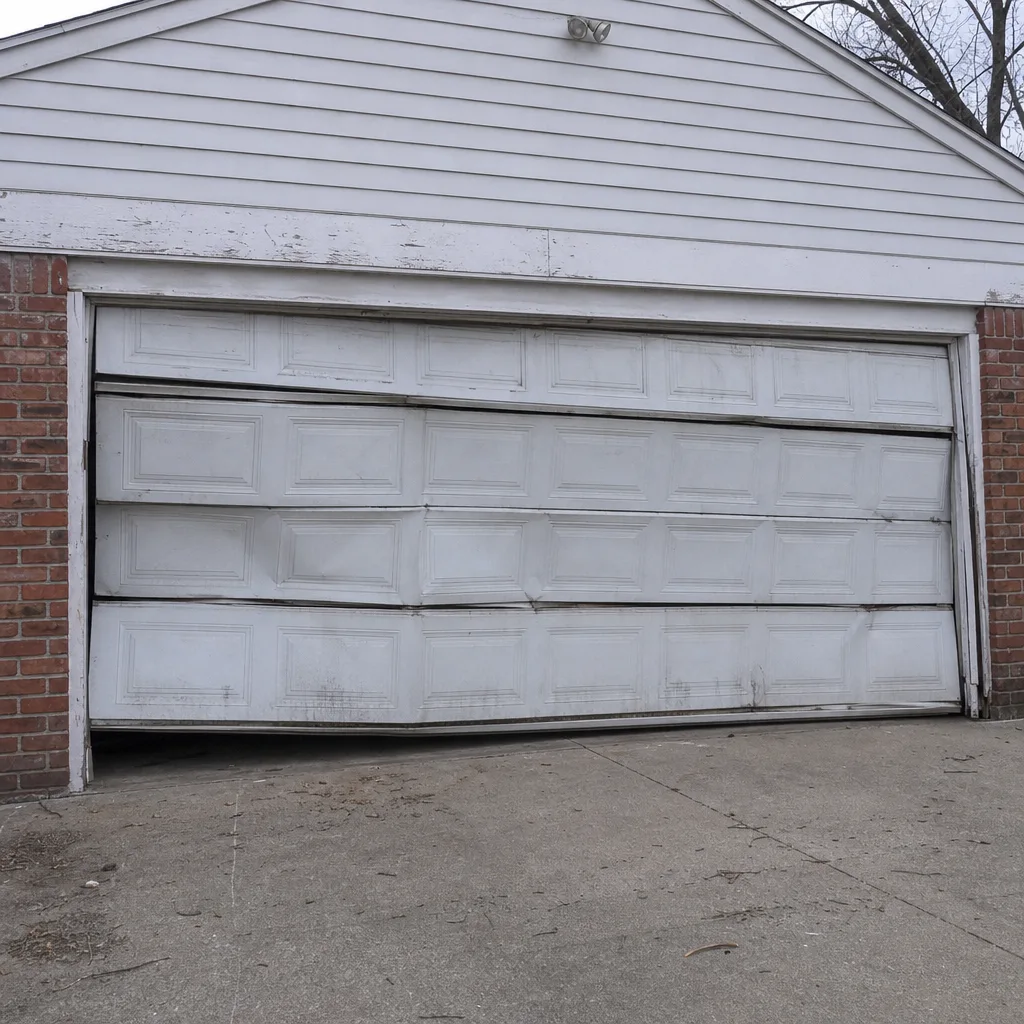 Before
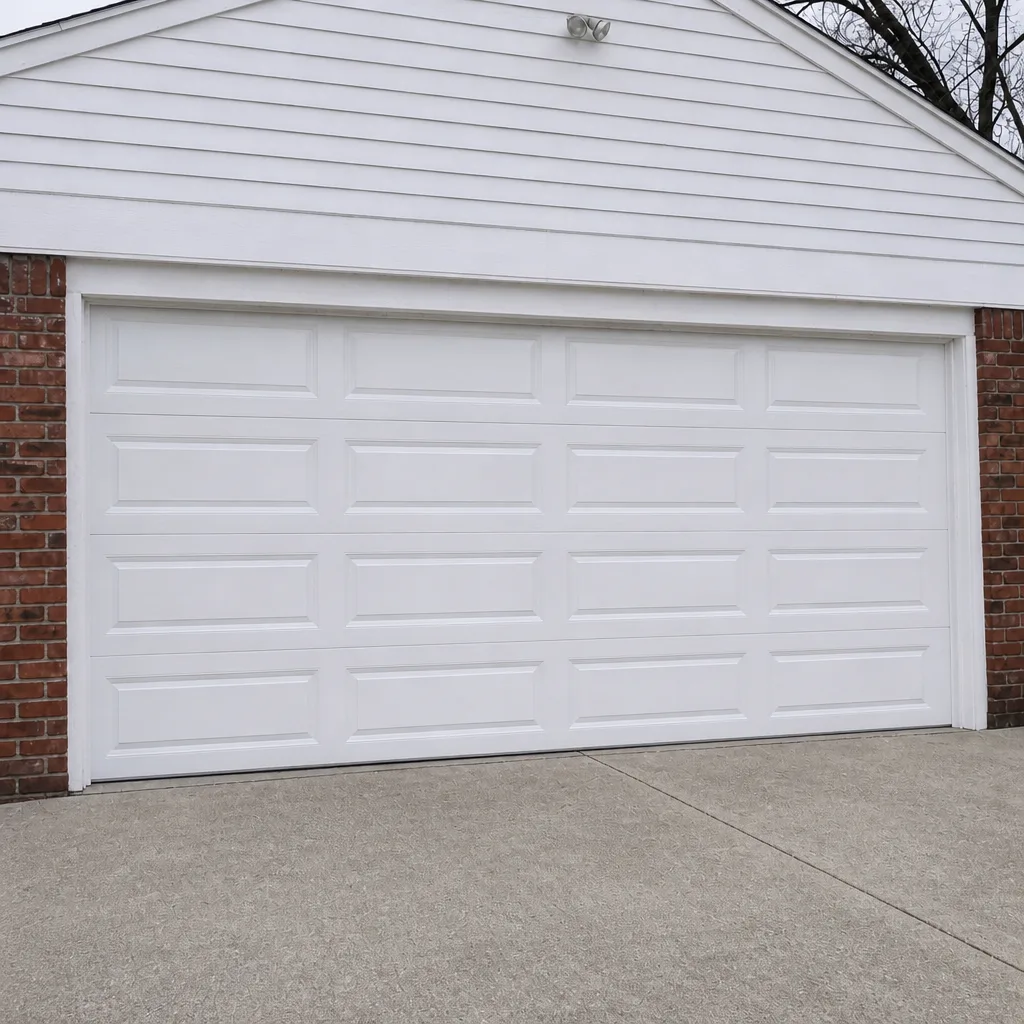 After
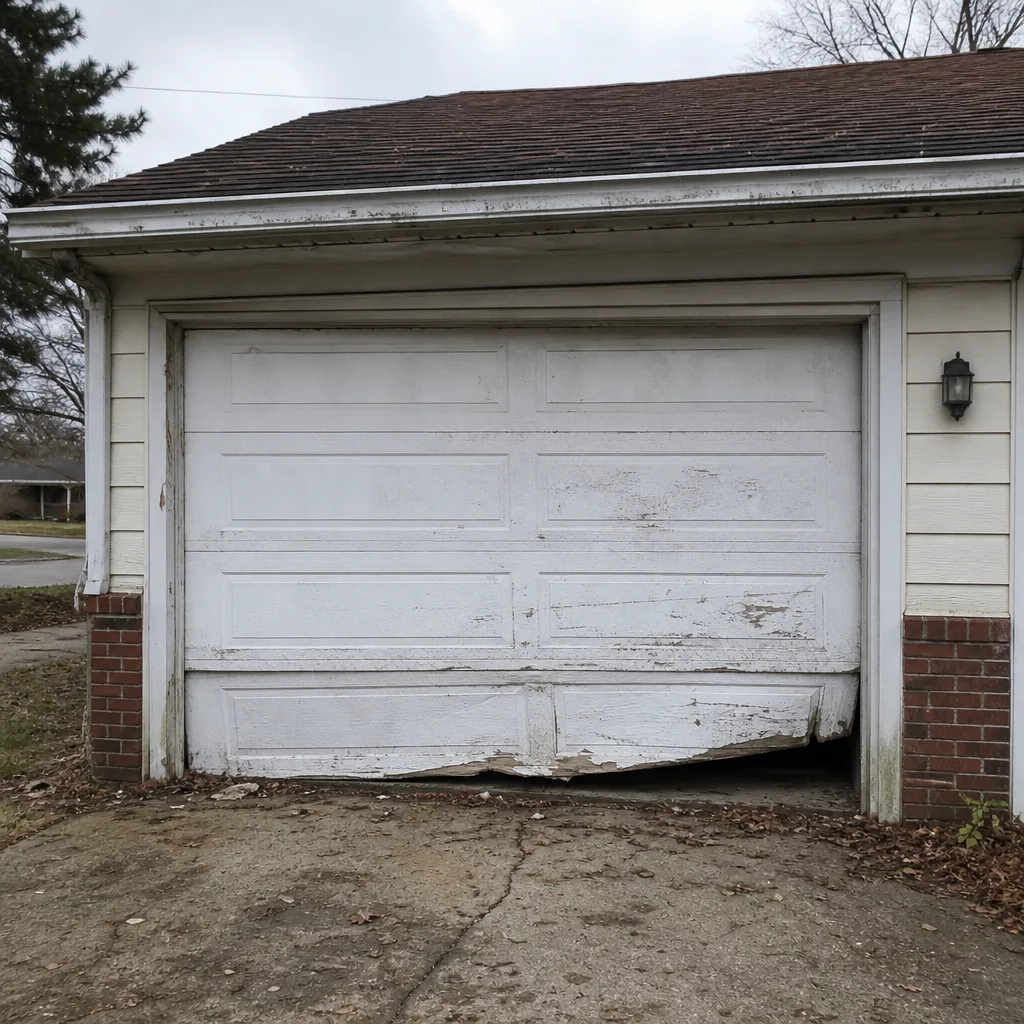 Before
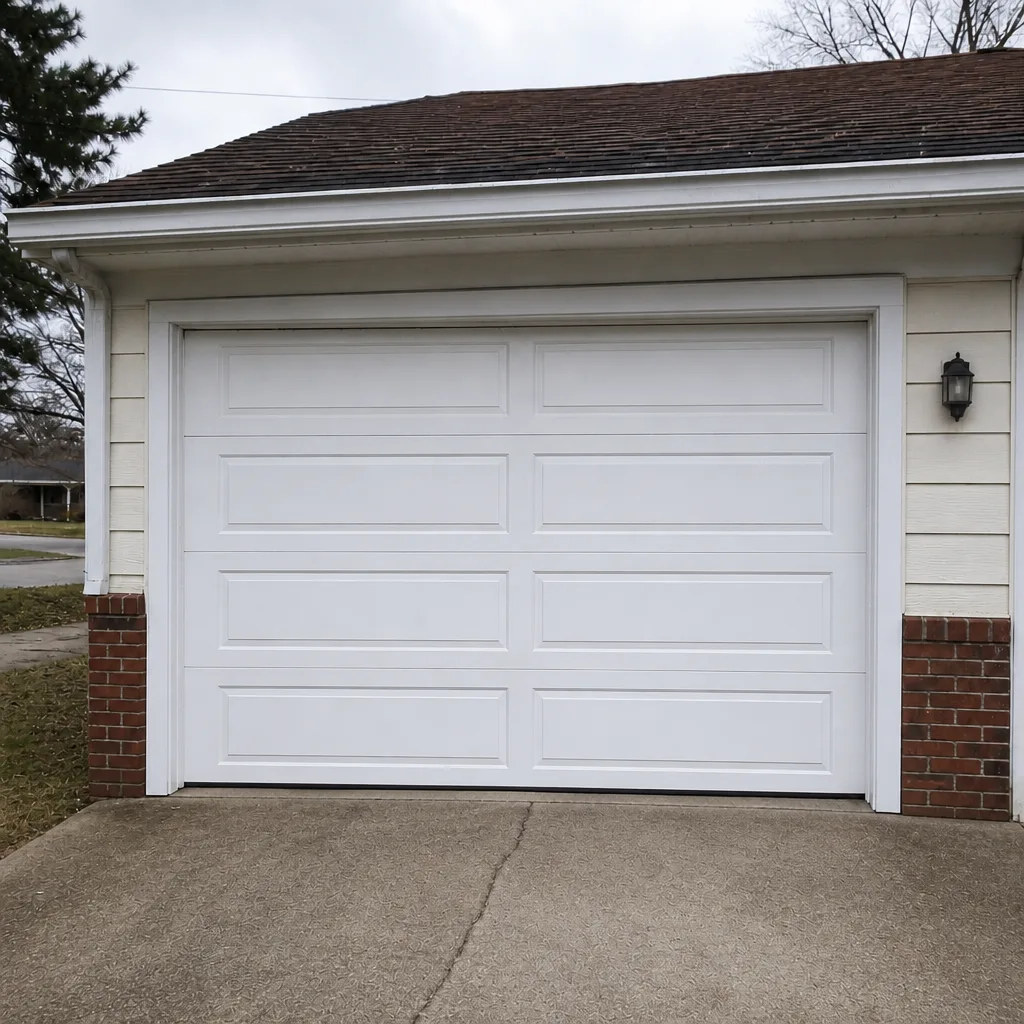 After
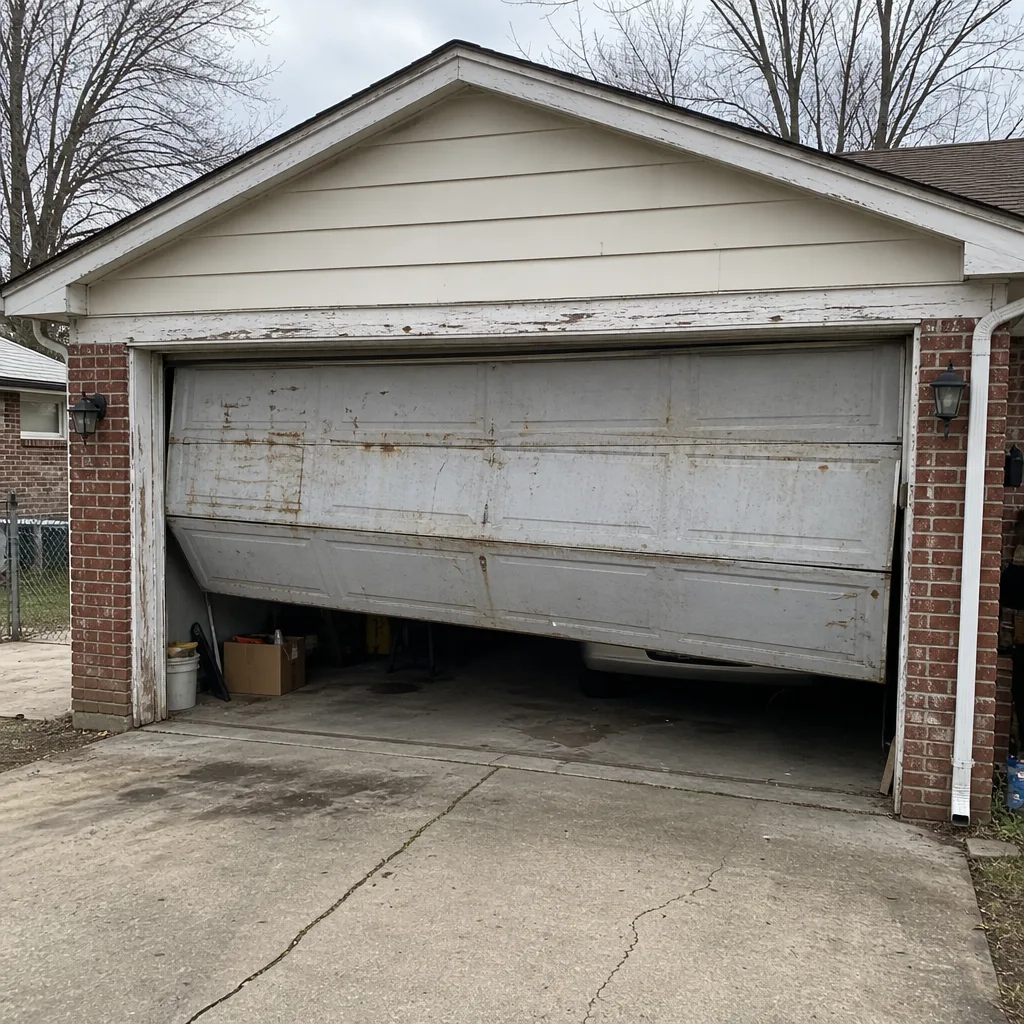 Before
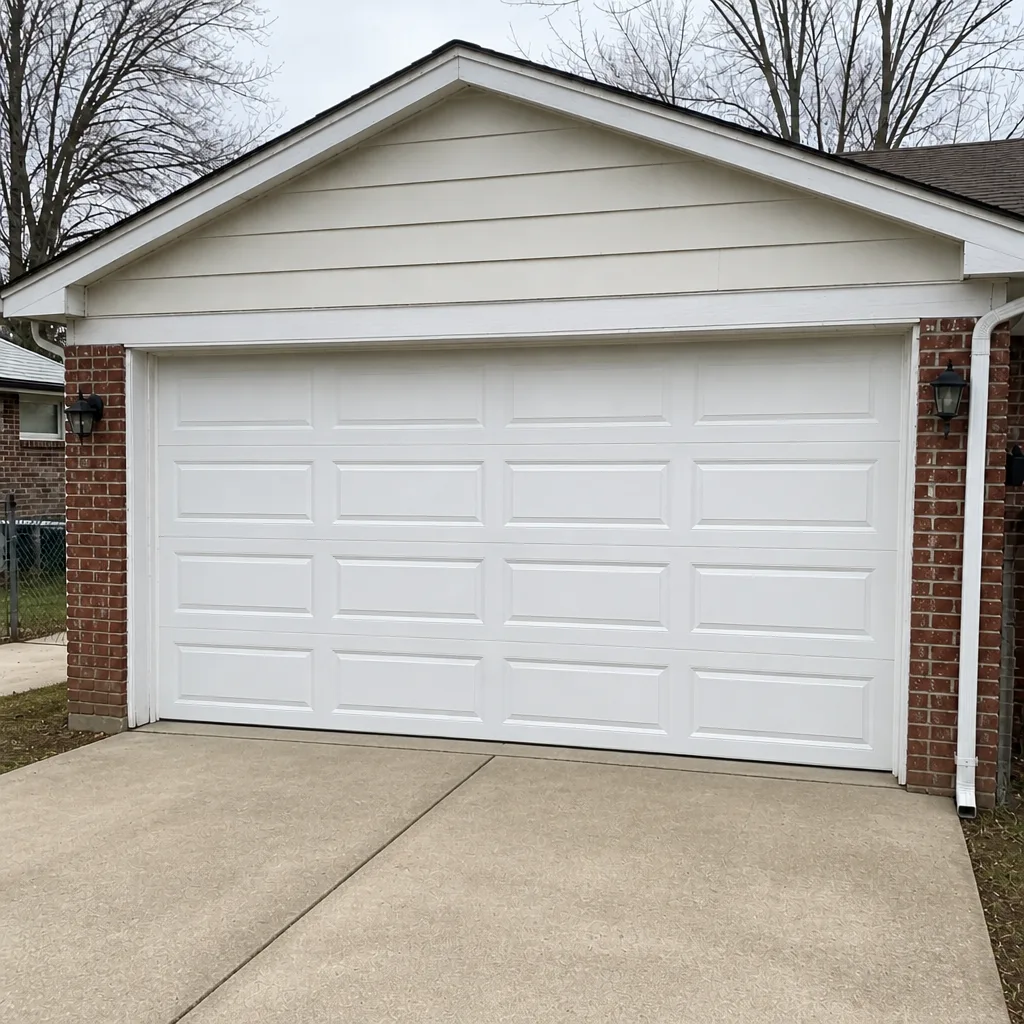 After
When to Call a Professional
Some jobs are a matter of time. Others carry real risk. Springs, cables and the counterbalance system hold enormous tension, and a spring that lets go while you’re working on it can cause serious injury. If a spring snaps, a cable comes loose, or the door hangs crooked, don’t try to fix it yourself – call a trained professional. Electrical work inside an opener or panel is the same story: safe to inspect, dangerous to service without training. Beyond safety, call for a door that reverses on its own, an opener that won’t respond, a track that’s bent, or a full replacement you’re planning. Avalon Garage Door Service offers free estimates in Sterling Heights. Call (866) 361-7888. We answer 24/7. Fast dispatch from 7am to 7pm, Sunday through Friday.
Frequently Asked Questions
An insulated steel door with a factory-applied finish is the best all-around choice for Sterling Heights, because it resists road salt, holds up through freeze-thaw cycles, and insulates if your garage is attached. Choose a material with a durable coating and keep the bottom seal intact. Call (866) 361-7888 for an exact quote on a door for your home – estimates are free.
Yes, especially if the garage is attached to the house. An insulated door keeps an attached garage warmer and reduces heat loss from adjacent rooms. On a detached garage, insulation matters less and you don’t need the highest rating available. Match the insulation to your garage type and how you use the space.
If the door is structurally sound and the problem is a spring, track, panel, seal or the opener, repair is usually the answer. If the door is heavily rusted through, badly warped, or you’re upgrading insulation and appearance, replacement makes more sense. A specialist diagnoses before recommending. Call (866) 361-7888 for a free estimate in Sterling Heights.
Yes. Macomb County’s clay soil holds water, and when it freezes, the ground shifts slightly. That small shift against a garage floor and frame is enough to make a door drag, reverse, or lose seal contact. If alignment problems show up after the first hard freeze, have the opening and threshold checked.
Yes. Our technicians are experienced with up to 14 years in the trade and trained to service eight major garage door and opener brands, including LiftMaster, Chamberlain, Genie, Clopay, Amarr, Wayne Dalton, Craftsman and Raynor. That breadth means your door is rarely one we don’t work on. Call (866) 361-7888 to book a free estimate.
No. The written estimate sets the price, and the price is quoted and agreed before any work starts. There’s no surprise invoice after the fact. Call (866) 361-7888 for an exact quote – estimates are free.
The Bottom Line
Sterling Heights garage doors face a specific mix: road salt, heavy snow, freeze-thaw cycles and clay soil that shifts under the threshold. Generic advice won’t get you far here. Choose an insulated steel door with a factory finish, keep the bottom seal in shape, size the opener for the weight of a two-car door, and check your HOA rules before you order. When something breaks, know whether you need a repair, an opener fix or a full replacement, and don’t touch a loaded spring yourself. A single-trade specialist who works on all the major brands can handle the whole job, from the first diagnosis to the finished install, with one call.
If you’re ready to get your garage door sorted, contact Avalon Garage Door Service at Avalon Garage Door Service. Call (866) 361-7888. We answer 24/7. Fast dispatch from 7am to 7pm, Sunday through Friday. Free estimates, upfront pricing, and every job quoted before work begins.
Written by the team at Avalon Garage Door Service.