
Last updated November 16, 2026
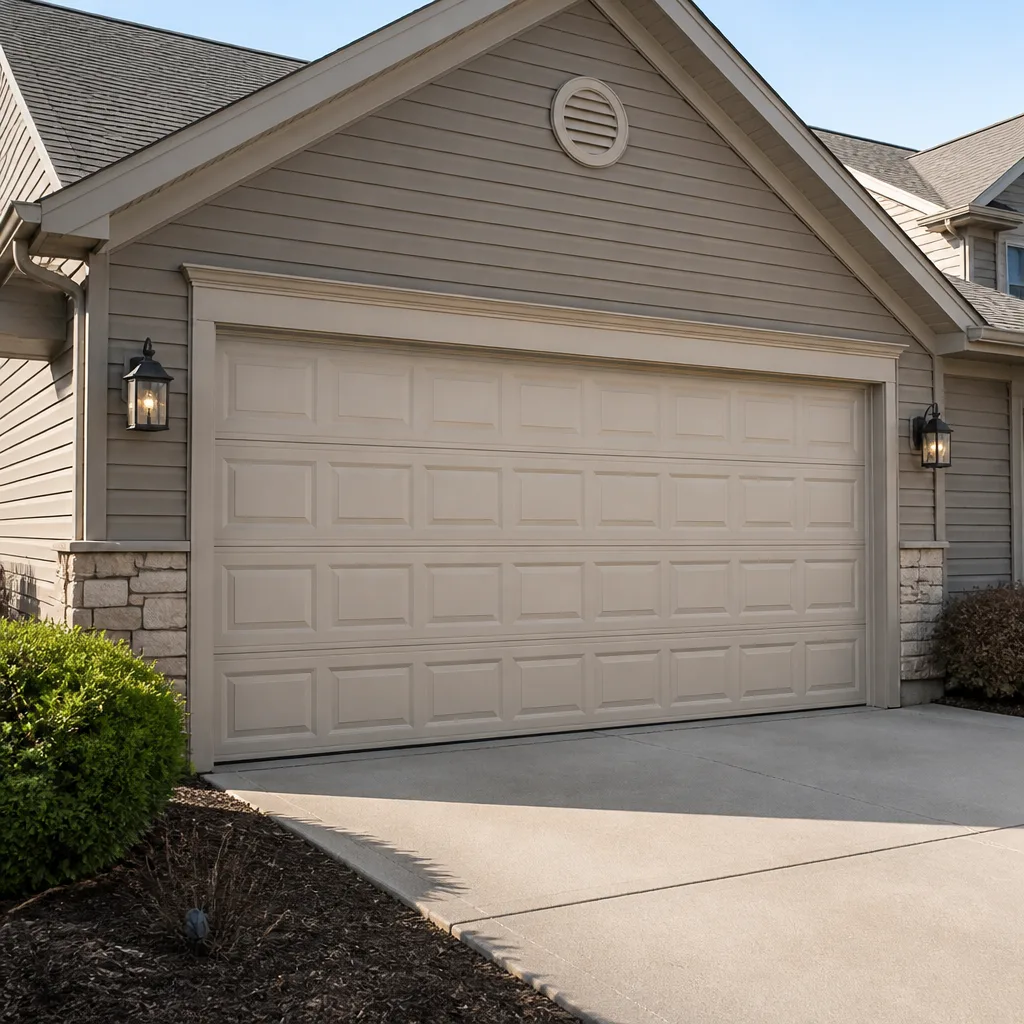 Raised-panel steel
 Carriage house
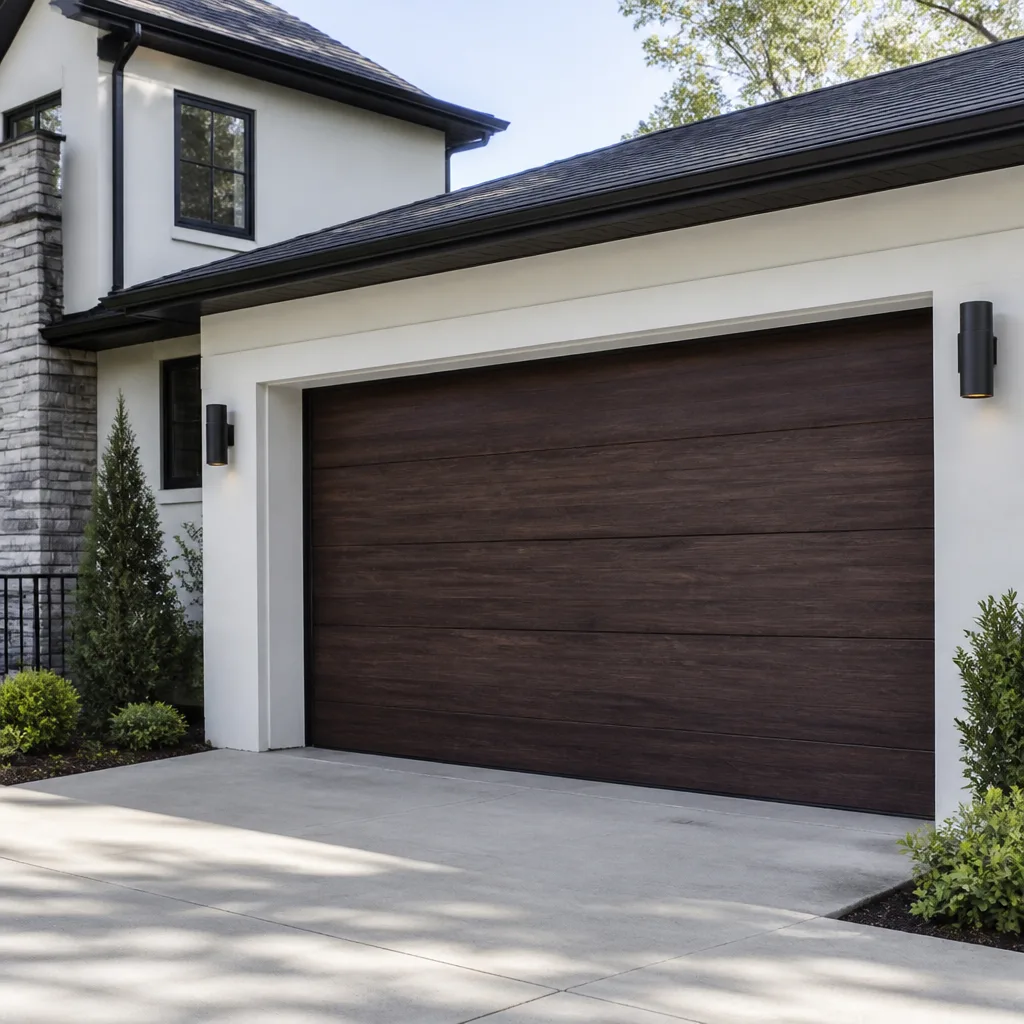 Modern flush
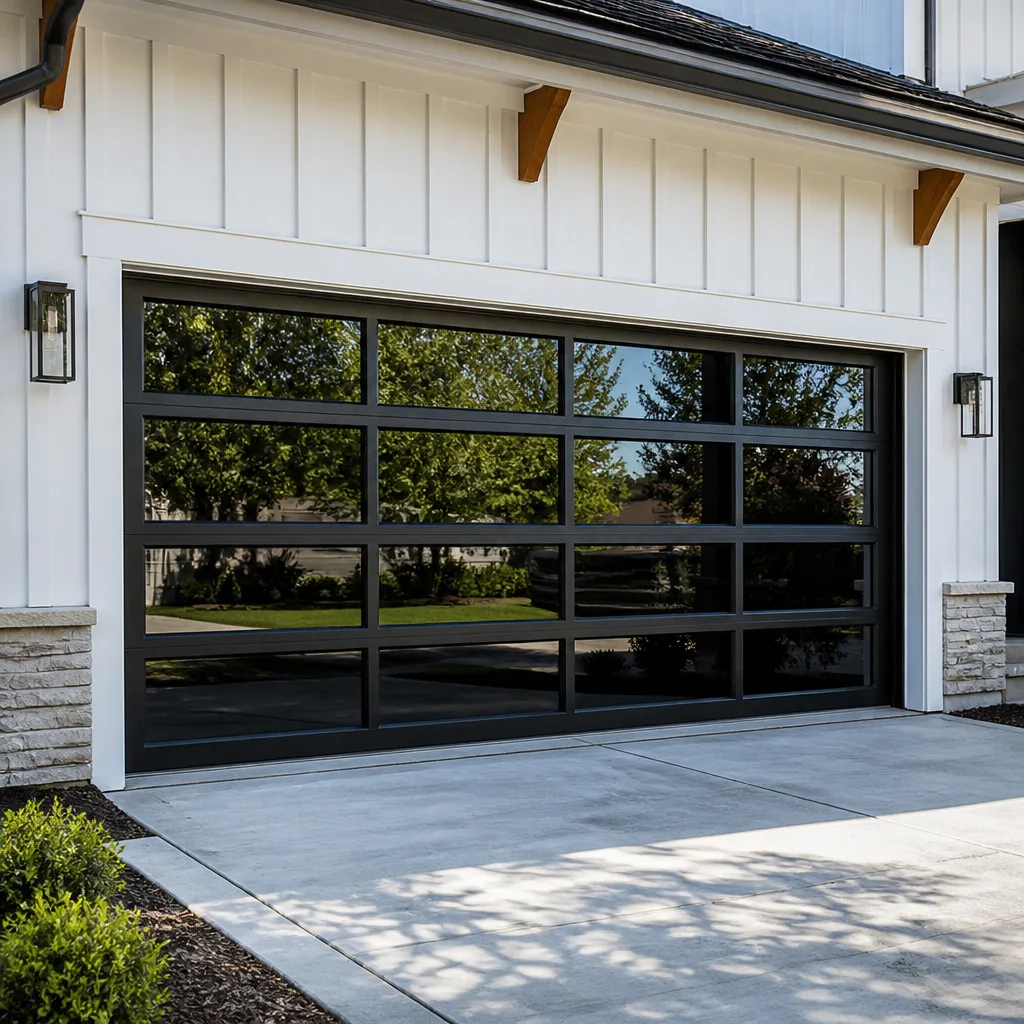 Full-view glass
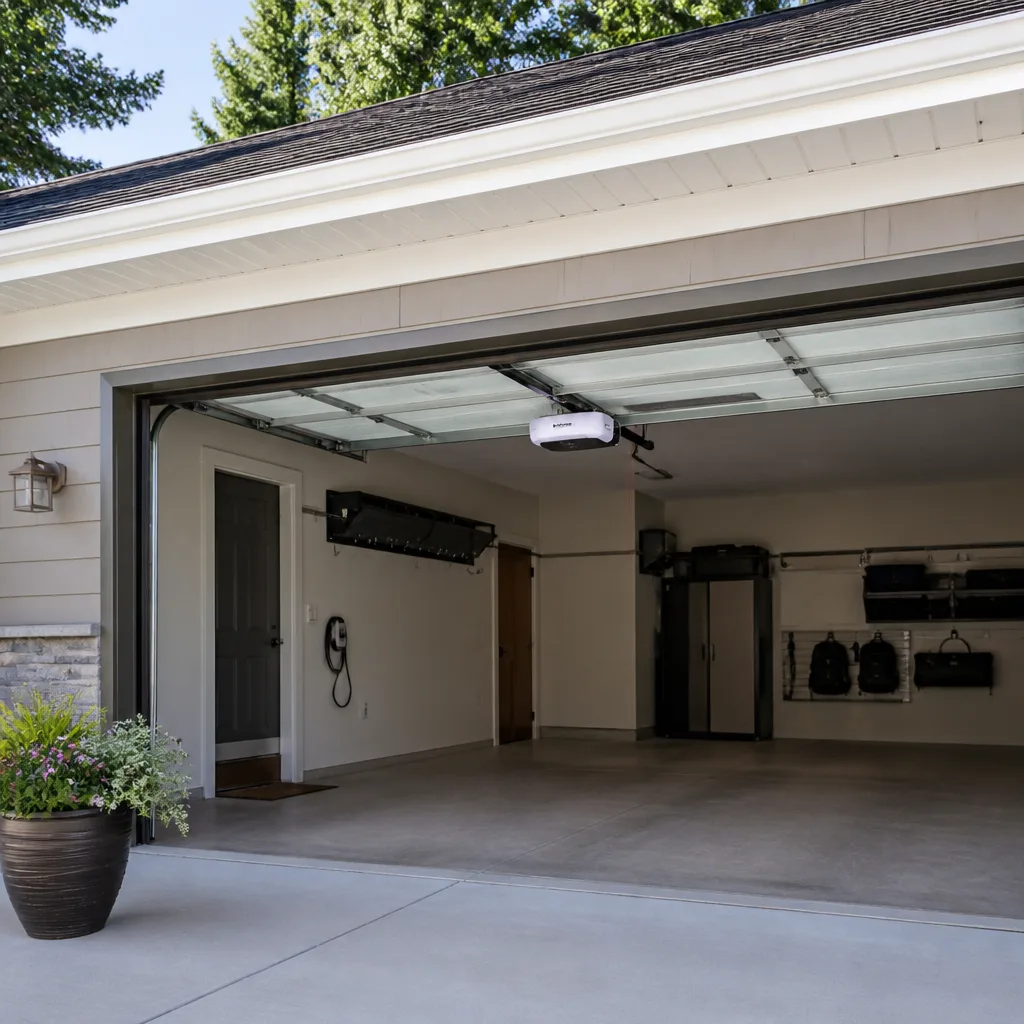 LiftMaster openers
 Chamberlain openers
Full 25-point door and opener safety check with every visit - springs, cables, rollers, tracks, and your LiftMaster or Chamberlain opener included
You get a price before we start. It does not change when the pro arrives.
Get your free estimateGarage Door Repair Maintenance Schedule: What to Do and When
Here’s a number worth sitting with: a garage door that opens and closes twice a day racks up more than 700 cycles in a single year. Most residential door hardware is rated around 10,000 cycles. That means your “new” door is already roughly 7% through its rated life by the end of year one, and a door you’ve had for a decade is likely well past the halfway mark. The standard “give it a checkup once a year” advice ignores all of this. Cycles, not the calendar, are what actually wear a door out, and the seasonal swings here in Sterling Heights add another layer the generic advice never accounts for. Below, we’ll lay out a maintenance schedule built around real mechanical wear and Michigan weather, so you check the right parts at the right time.
Quick Answer
A garage door maintenance schedule should be built around cycles and seasons, not fixed dates. Inspect the balance, rollers, and safety features at roughly 1,000 and 5,000 cycles, lubricate moving metal parts twice a year (and before the first hard freeze in Sterling Heights), and have springs, cables, and openers evaluated by a technician around the 10,000-cycle mark or sooner if you notice symptoms. Lubrication and visual checks are the tasks you can own; anything involving springs, cables, or the opener’s internal mechanisms belongs to a trained professional.
Styles & brands we work with
- Raised-panel steel
- Carriage house
- Modern flush
- Full-view glass
- LiftMaster openers
- Chamberlain openers
Table of Contents
- Why Cycles Beat the Calendar
- The Cycle-Based Inspection Schedule
- Pre-Winter Preparation for Sterling Heights
- Lubrication Spec by Component
- Early-Warning Indicators to Watch For
- What You Can Do vs. What Needs a Technician
- Brand-Specific Maintenance Notes
- Common Mistakes to Avoid
Why Cycles Beat the Calendar
A door that sees one round trip a day and a door that sees twelve do not age at the same rate, yet an annual checklist treats them identically. Every open-and-close counts against the same wear budget: the spring coil that stretches and relaxes, the hinge knuckle that pivots, the roller bearing that spins, the opener gear that engages. A busy household with a teenager, a commuting driver, and a delivery-heavy week might put a door through several times the cycles of a quiet one. Same door, same year, wildly different wear.
This is where cycle thinking pays off. If you can estimate your daily cycles, you can predict when parts are approaching their service limits rather than reacting after something breaks. A reasonable estimate: count the number of times your household opens the door on a typical day, add one for each delivery or visitor, then multiply by 365. Most suburban Sterling Heights homes we work with land somewhere between 700 and 1,500 cycles a year. From there, the math is straightforward.
Cycles also explain a pattern we see constantly: doors that fail sooner than their owners expect. “It’s only eight years old,” is a common reaction. But at 1,500 cycles a year, eight years is 12,000 cycles, which is past the rated life of most standard torsion springs. The door didn’t fail early. It failed on schedule, and the owner was measuring the wrong thing. Once you start tracking cycles, maintenance stops being guesswork and becomes predictive. This is the framework the rest of this guide builds on, and it’s why a proper garage door service visit starts with questions about how often the door actually gets used.
The Cycle-Based Inspection Schedule
Instead of “check it every spring,” use the cycle marks below. Estimate where your door sits, then look at what each milestone calls for. These are inspection and service landmarks, not replacement dates. Many doors sail past 10,000 cycles with good maintenance.
Around 1,000 cycles: the settling-in check
Most hardware has bedded in by now. This is where you catch small alignment issues before they become uneven wear.
- Test the balance. Disconnect the opener (pull the release handle) and lift the door halfway by hand. A properly balanced door should stay put, not drift down or rise on its own. If it drops, the spring tension is off and a technician should adjust it.
- Check the auto-reverse. Place a small object in the door’s path and let it close. The door should reverse on contact. Also test the photo-eye safety sensors by blocking the beam.
- Look at the rollers. Rollers should turn freely and sit straight in the track. If you hear a grinding or see flat spots, they’re wearing.
- Wipe and listen. Listen for new noises. Squeaks and rattles are early signals, not normal background sound.
Around 5,000 cycles: the mid-life service
This is where a visual check from the ground starts to miss things a trained eye would catch. Hinge knuckles loosen, rollers develop flat spots, and cables show their first signs of fraying. A technician can inspect cable condition closely, verify spring measurements against specs, and check the opener’s drive gear and force settings. This is also when we typically recommend a full lubrication pass and a fastener torque check. Around a Sterling Heights home, the freeze-thaw cycle of a typical winter works fasteners loose faster than a warmer climate would, so a mid-life check is worth doing properly.
Around 10,000 cycles: the major evaluation
Standard torsion springs are commonly rated for this ballpark, so a door approaching 10,000 cycles deserves a full evaluation: springs measured and assessed, cables and drums inspected, hinges and rollers reviewed for replacement, and the opener checked for wear on its drive system. Replacing a spring proactively during a scheduled visit is far less disruptive than replacing it after it snaps and leaves a car trapped. For doors past this point, we recommend an inspection every 2,000 to 3,000 cycles to keep an eye on the parts most likely to age out next.
Pre-Winter Preparation for Sterling Heights
Michigan winters stress a garage door in ways the generic checklist never mentions. Cold changes the behavior of three things at once: spring tension, bottom seal compression, and lubricant viscosity. Getting ahead of these before the first hard freeze saves a lot of frustration in January.
Metal contracts in the cold, which changes the tension in a torsion spring. A door that balanced perfectly in October may feel slightly heavy or drop faster in February. This is normal to a degree, but if the door becomes noticeably harder to lift by hand or slams down when released, the spring tension has shifted beyond the acceptable range and needs a technician. Don’t try to compensate by adjusting it yourself; a wound torsion spring stores enormous energy and can cause serious injury if handled incorrectly.
The bottom seal is where cold hits hardest in a Michigan garage. Rubber and vinyl seals stiffen in low temperatures and can compress unevenly or fail to seat, letting cold air and snowmelt under the door. Before winter, inspect the seal along its width for cracks, tears, or a gap at either corner. A seal that no longer makes contact lets meltwater pool at the threshold, and repeated freezing turns that into a hazard at your garage entry.
Lubricant viscosity is the third piece. The light lubricant that works fine in July can thicken in single-digit temperatures, leaving hinges and rollers under-lubricated right when the door needs to move most smoothly. Using a garage-door-specific lubricant that holds up in cold, applied to hinges, rollers, and the spring before the season turns, is a small task with outsized payoff. If a door does fail during a cold snap, our garage door repair team handles both urgent calls and planned service. Winter prep is also a good moment to look at your weather sealing and threshold, which we cover in the pre-freeze checklist below.
- Wipe the bottom seal clean and check for cracks or a gap at the corners.
- Apply cold-rated garage door lubricant to hinges, rollers, and the torsion spring.
- Test the door’s balance by hand with the opener disconnected.
- Test the auto-reverse and the photo-eye safety sensors.
- Tighten any visible loose bolts on the hinges and brackets.
- Listen for new noises before the first freeze, not after.
Lubrication Spec by Component
“Just use garage door lubricant” is advice that leaves out half the story. Where you put it, and what you must keep dry, matters as much as the product itself. Here’s the component-by-component breakdown we use.
- Hinges: A drop or light spray at each pivot point. These are exactly what they sound like, and they’re one of the highest-value lubrication spots. Use a garage-door-specific lubricant, not WD-40 or a general household spray, which don’t hold up under load.
- Rollers: One drop on each roller bearing or stem. The roller should spin freely after. If it won’t turn or has flat spots, replacement makes more sense than lubricant.
- Torsion spring: A light coat along the coils where they slide against each other. This reduces friction but does not repair a worn spring.
- Tracks: Keep them dry. This is the mistake we see most often. Grease on a track collects dust and grit, which gets pushed into the rollers and grinds on the bearings. Wipe the track with a clean cloth instead, and let the rollers ride clean metal.
- Photo-eye lenses: Wipe clean with a dry cloth. The sensors themselves get no lubricant.
- Opener drive (chain or belt): Follow the manufacturer’s guidance on the specific unit. Most chain and belt drives prefer a light, dry lubricant where the manual specifies it, and some belt drives need none at all. When in doubt, leave the opener drive to a technician, since over-lubricating a chain can attract grit.
The general rule: metal parts that pivot or slide against each other get lubricant, metal that carries a rolling load (the tracks) stays dry, and electronics and sensors get a clean cloth. If you’re running a Genie or a Chamberlain opener, checking its specific manual is worth the two minutes. This is the kind of detail a specialist catches that a generalist misses. If your opener is behaving oddly after lubrication, our garage door opener repair team can diagnose it.
Early-Warning Indicators to Watch For
The best maintenance is predictive. A door rarely fails without warning, and the signals show up during the inspection you already do. Build these into every check, and you’ll catch the next failure before it leaves you stranded.
- A door that no longer stays halfway up. This is the classic sign that spring tension is drifting. It means the spring is losing its rated force, and a failure is on the horizon. Get it looked at before it snaps.
- Visible cable fraying. Even one broken strand on a lift cable is a red flag. Cables carry heavy load and should be replaced by a technician, not have the fray removed.
- A door that reverses without meeting an obstacle. A door that goes back up after closing a few inches is signaling a sensor problem or a force-setting issue, both of which need diagnosis.
- New sounds. Grinding, popping, scraping, or rattling that wasn’t there last month are all early indicators of worn rollers, loose hinges, or a misaligned track.
- A gap at the bottom seal. Daylight showing under the door in a Sterling Heights winter means cold air and meltwater are getting in, and it signals a seal that needs replacement.
- The opener hesitating. A delayed or struggling opener drive is often the first symptom of a worn gear or a limit setting that’s drifted.
- Uneven door travel. If one side of the door rises faster than the other, the tracks or cables are out of balance.
None of these should be ignored “until it gets worse.” Most of them are cheap to address early and expensive to handle after they fail. Tracking them during your scheduled checks is what turns maintenance into a predictive practice.
What You Can Do vs. What Needs a Technician
Honest distinction here. Some tasks belong to the homeowner, and some carry real risk if you attempt them without training. A maintenance schedule that blurs these lines isn’t useful.
You can own these
- Visual inspection of the door, tracks, and hardware from the ground.
- Wiping the tracks clean with a dry cloth.
- Applying garage-door-specific lubricant to hinges, rollers, and the torsion spring.
- Testing the auto-reverse and photo-eye safety features.
- Tightening visible loose bolts on hinges and brackets.
- Wiping the photo-eye lenses clean.
- Inspecting the bottom seal for cracks or gaps.
These need a trained technician
- Spring adjustment or replacement. This is the single most dangerous task on a garage door. A wound torsion spring stores a tremendous amount of energy, and a spring or cable that fails under your hand can cause serious injury. Only trained professionals should adjust, tension, or replace them.
- Lift cable replacement. Cables are under heavy tension and are part of the door’s safety system.
- Replacing rollers with worn stems or removing a roller from the track. Not worth the risk when a technician can do it properly.
- Opener electrical work or internal mechanism repair. The opener has high-voltage components and safety circuits. Diagnosis belongs to a technician.
- Adjusting the door’s balance or force settings. Getting these wrong compromises the auto-reverse safety feature.
The pattern is simple: lubrication and inspection you can do, and anything that involves stored spring energy, cables, or the opener’s internals should go to a professional. Our technicians have up to 14 years of experience, and the reason a trained hand matters here is the risk, plain and simple.
Brand-Specific Maintenance Notes
Maintenance isn’t quite universal. The brand of door and opener on your Sterling Heights home shapes a few of the details: the specific limiter settings on a Genie opener, the spring configuration on a Clopay door, the seal profile on an Amarr or Wayne Dalton panel. This is why we stay fluent across the major brands rather than steering every customer toward one manufacturer. We service LiftMaster, Chamberlain, Genie, Clopay, Amarr, Wayne Dalton, Craftsman, and Raynor, so you can keep the equipment you already have without a brand switch being part of your maintenance plan.
For a Genie or Chamberlain opener, check the owner’s manual on the recommended chain or belt lubrication and the correct photo-eye cleaning method. For a Clopay or Wayne Dalton door, review the bottom seal replacement interval and the recommended hardware lubricant. For an Amarr or Raynor door, spring balance is worth watching closely as it approaches the cycle marks above, since a heavy panel puts more load on the torsion system. These aren’t things to memorize. What matters is that when something on your door needs service, the technician knows that specific system and how it’s built, rather than working from a generic script. A company that only does garage doors has seen your problem before, and it has seen it on the exact brand of door in your garage.
Common Mistakes to Avoid
- Using the calendar as your trigger. A door that sees 1,500 cycles a year ages faster than a door that sees 500. If you maintain on a fixed annual schedule, the busy door gets under-serviced and the quiet door gets over-serviced. Measure cycles instead.
- Greasing the tracks. This is the single most common maintenance error we see. Grease on a track attracts grit and grinds away at the rollers. Keep the tracks dry and clean, and the rollers will last far longer.
- Ignoring the bottom seal until winter. In a Michigan climate, a worn seal lets cold air and meltwater under the door all season. Inspect it in the fall, and you’ll avoid a stiff, cracked seal that no longer sits flush.
- Adjusting the torsion spring yourself to “fix” a heavy door. A door that’s drifted out of balance needs a technician, not a homeowner with a wrench. The stored energy in a wound spring makes this genuinely dangerous.
- Treating new noises as normal. A grinding or popping door is telling you something. Waiting until it fails turns a worn roller into a stranded car. Listen for it, then act.
- Skipping the spring age check. Standard torsion springs are rated around 10,000 cycles, and a door well past that is on borrowed time. Know where your door sits so you can plan the spring replacement instead of reacting to it.
- Assuming same-day fixes for a planned service. A repair on a broken door can often be scheduled quickly, but a full door replacement involves measuring, ordering, and a scheduled install. Planning for it avoids surprises.
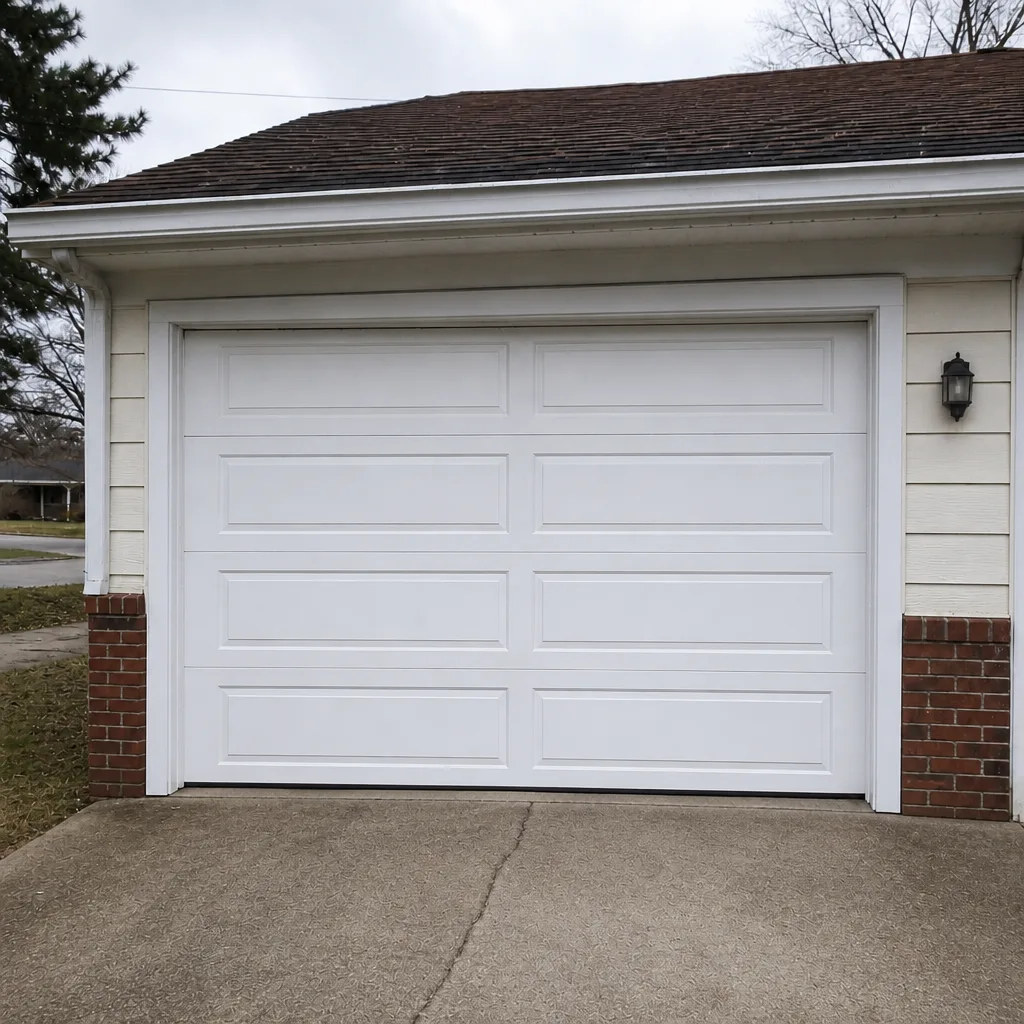
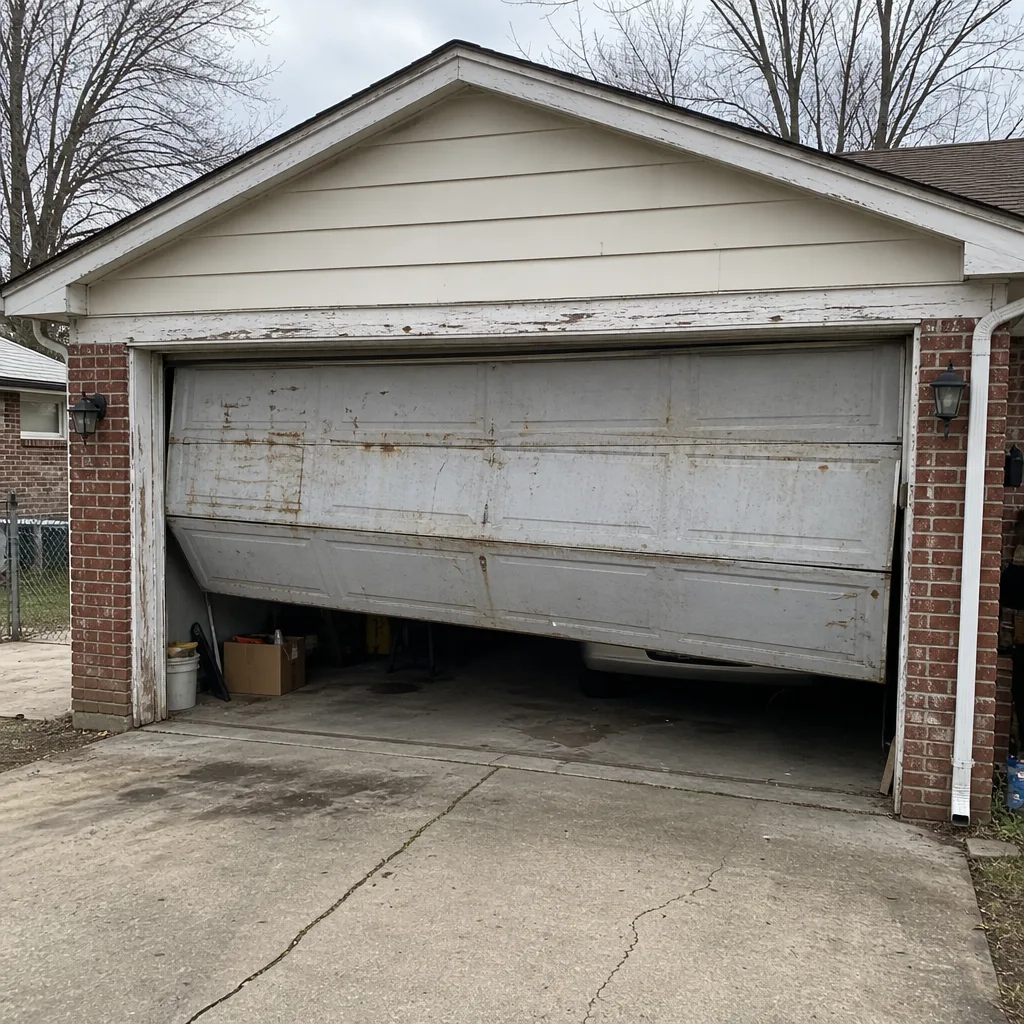
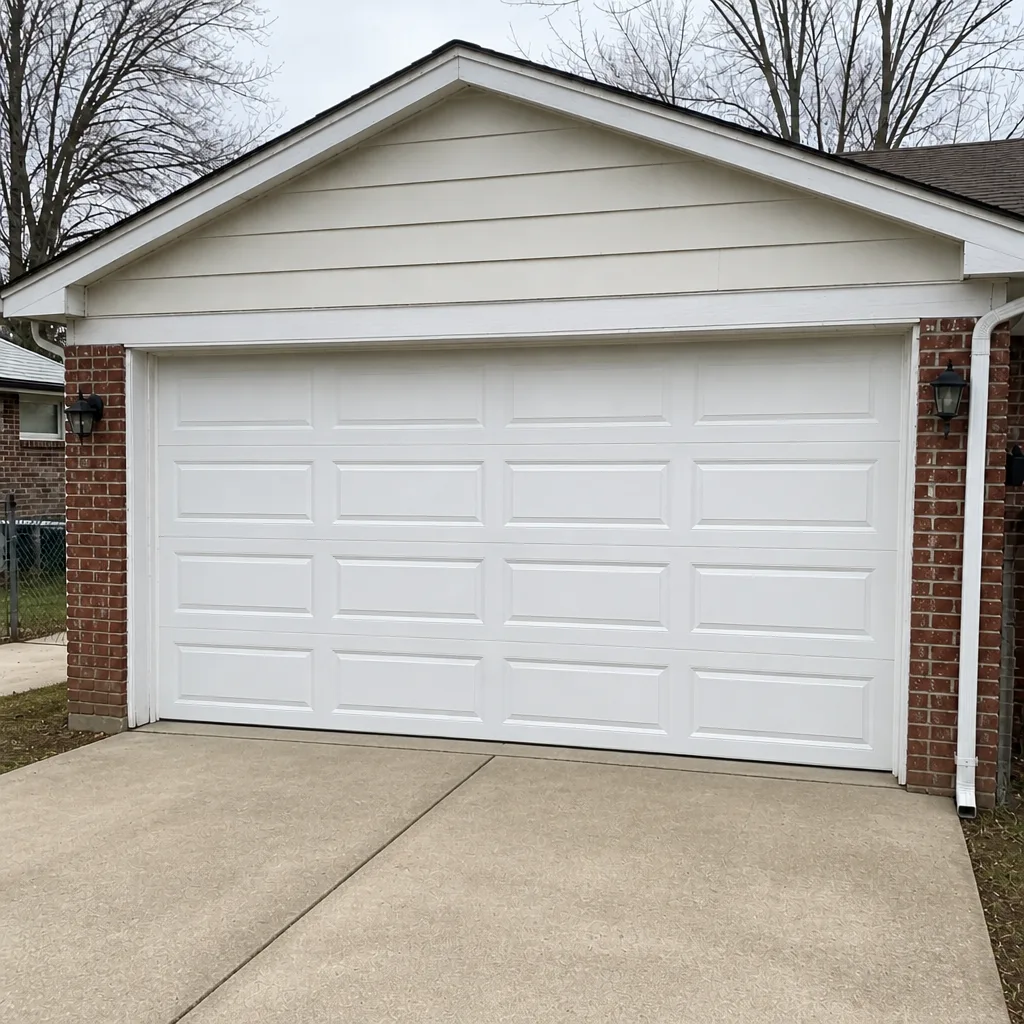
See the difference
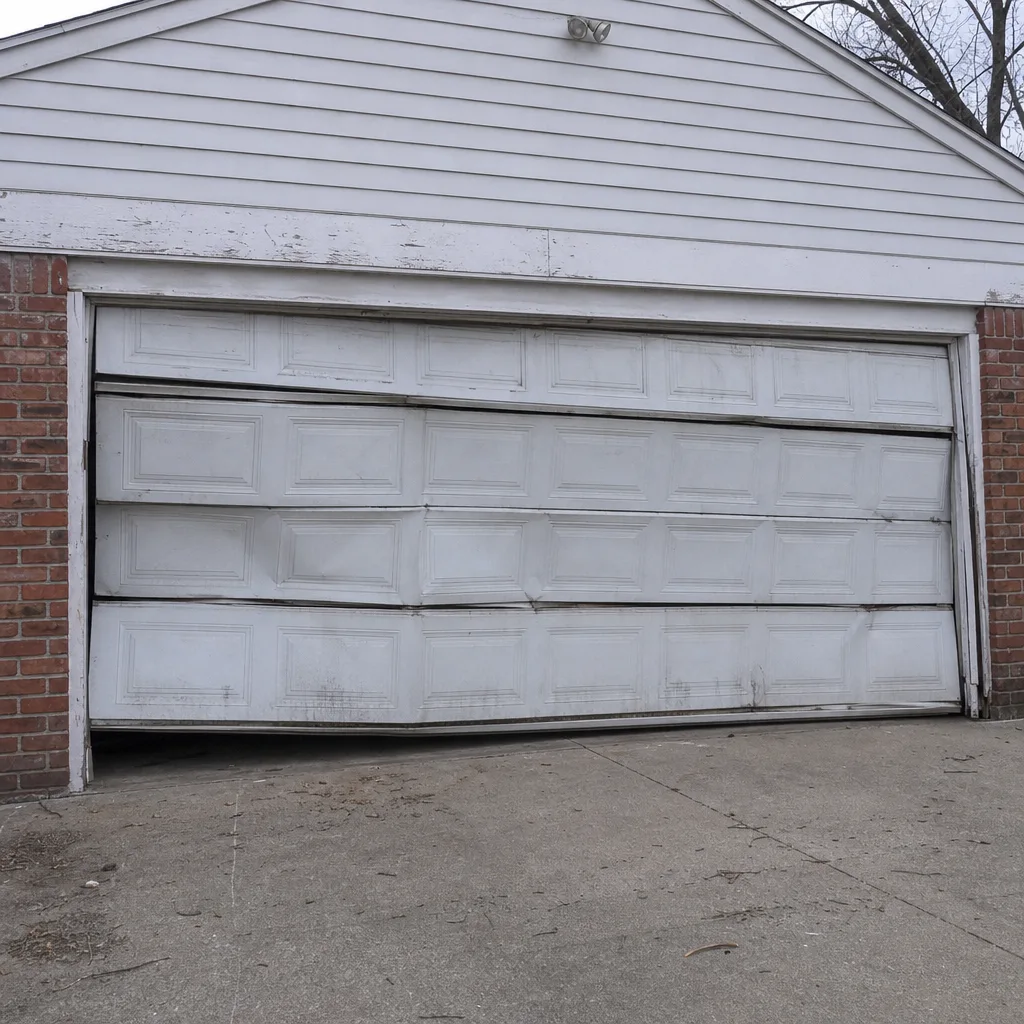 Before
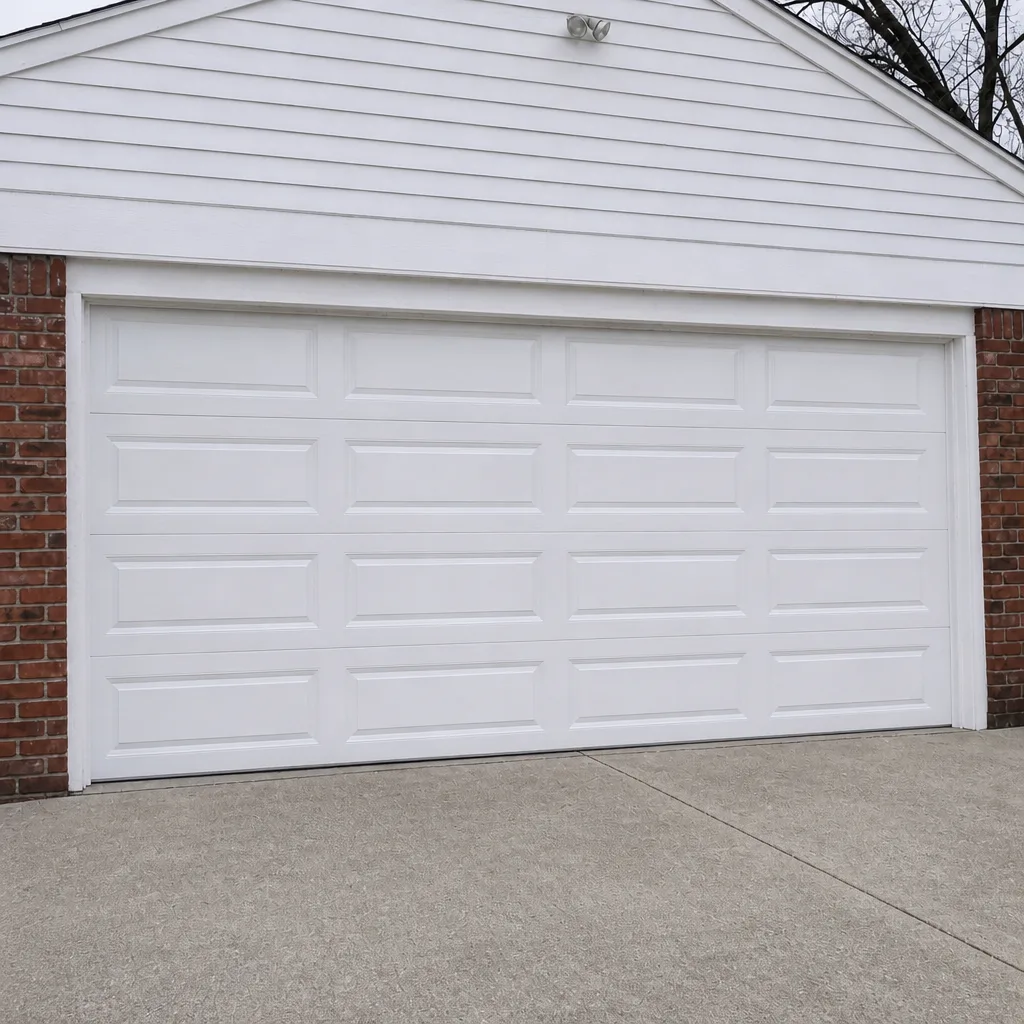 After
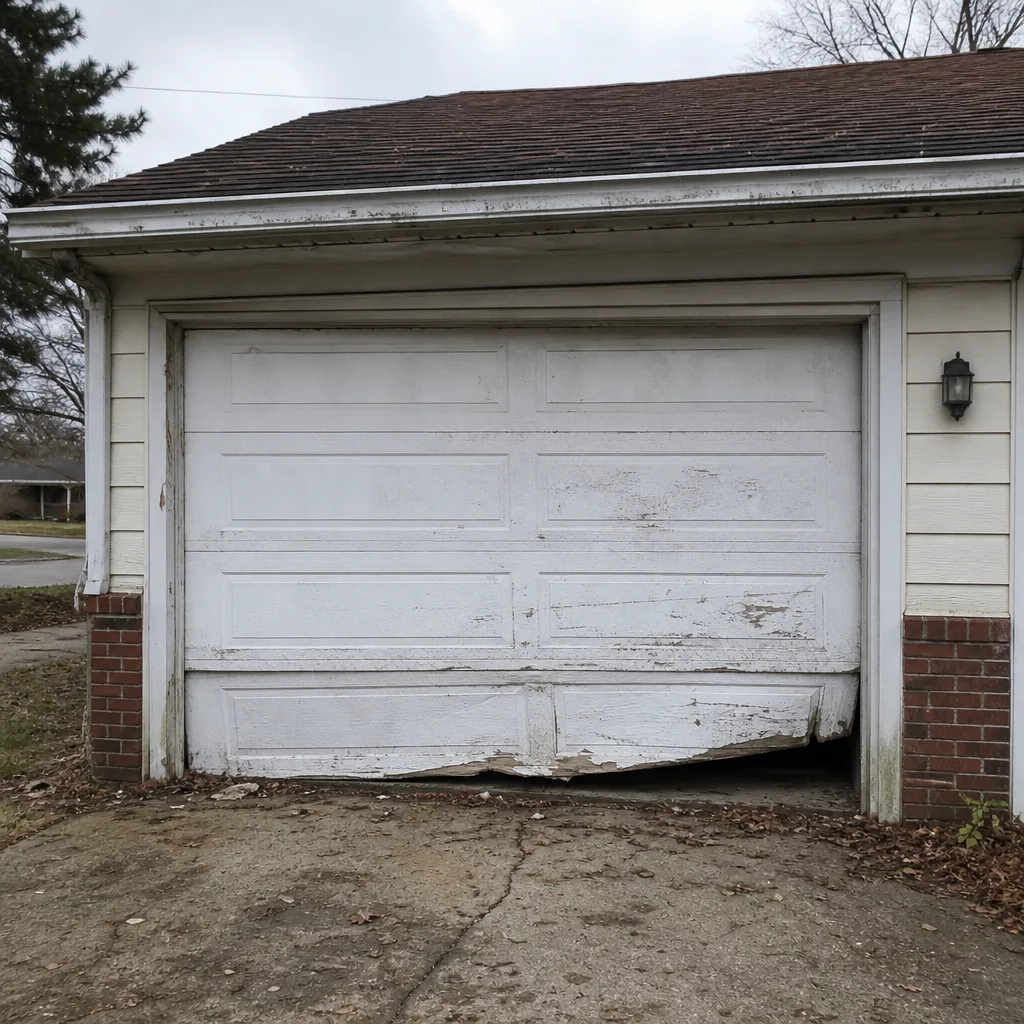 Before
 After
 Before
 After
When to Call a Professional
Call us when a check turns up a balance problem, a frayed cable, a spring that’s lost its tension, or an opener that’s hesitating. Call immediately if the door is visibly off its tracks, if a spring has snapped, or if the door reverses unpredictably. Those situations carry real risk, and they’re not the place for a homeowner to diagnose. If your door is near the 10,000-cycle mark or you’ve lost track of its history, a single inspection establishes a baseline for everything in this guide. Avalon Garage Door Service offers free estimates in Sterling Heights and serves the surrounding area; our technicians are trained on eight major brands, and we handle repair, opener service, and full installation from one point of contact. Call (866) 361-7888 for a free estimate. We answer 24/7. Fast dispatch from 7am to 7pm, Sunday through Friday.
Frequently Asked Questions
Service it by cycle count, not by the calendar. Inspect and lubricate around 1,000 cycles, do a mid-life technician service around 5,000, and evaluate springs, cables, and the opener around 10,000. For most Sterling Heights households that works out to a professional visit every year or two, with homeowner lubrication and visual checks in between. Call (866) 361-7888 for an exact quote; estimates are free.
Check the bottom seal for cracks or gaps, apply cold-rated lubricant to the hinges, rollers, and torsion spring, test the balance by hand, and confirm the auto-reverse and photo-eye sensors work. Cold changes spring tension, seal compression, and lubricant viscosity at the same time, so this pre-freeze pass prevents winter frustration. Call (866) 361-7888 to schedule a pre-winter inspection.
No. A wound torsion spring stores dangerous energy, and an incorrect adjustment can cause serious injury. Spring work belongs to a trained technician. You can and should test the balance and watch for symptoms, then call a professional. Our technicians have up to 14 years of experience; call (866) 361-7888 for a free estimate.
Metal contracts in the cold, which reduces the effective tension in a torsion spring, making a balanced door feel heavier. If the change is slight, it’s seasonal. If the door is noticeably heavy or drops quickly, the spring has drifted out of range and needs a technician. Call (866) 361-7888 to have it checked before a spring fails.
A door that opens and closes twice a day is at over 700 cycles a year, and a busier household can easily reach 1,500. Most residential hardware is rated around 10,000 cycles, so a decade of use can approach the spring’s rated life. Track your daily use and do the math. If you’re near the limit, call (866) 361-7888 for an inspection.
No. Leave the tracks dry. Lubricant on the tracks collects grit and wears out the rollers, while the rollers should be lubricated at their bearings. Wipe the tracks clean instead. If your door sounds rough despite that, call (866) 361-7888 for an exact quote; estimates are free.
The Bottom Line
A garage door maintenance schedule that works is built around cycles and Michigan seasons, not fixed dates on a calendar. Inspect and lubricate at the 1,000-cycle mark, do a technician service around 5,000, and evaluate the critical parts around 10,000. Prep the door for the freeze before winter turns. Keep the tracks dry, lubricate the pivots, and watch for the early-warning signals that predict a failure before it strands your car. If your door is due for a service, has lost its balance, or you’d rather have a trained eye establish a baseline, we’re here to help. Call (866) 361-7888 for a free estimate. We answer 24/7. Fast dispatch from 7am to 7pm, Sunday through Friday.
Written by the team at Avalon Garage Door Service.